

What Is Chenille Fabric? Texture, Uses & Care Guide

Chenille is a soft, textured fabric recognised by its raised, fuzzy surface. It is used across home furnishings such as upholstery, cushions, throws, blankets and some sofa covers. If you are comparing materials for a living room, understanding how chenille is made and how it behaves can help you decide where it suits your home.
What Is Chenille Fabric?
The word “chenille” comes from the French word for caterpillar, a reference to the yarn’s fuzzy appearance. Chenille yarn is typically created so short fibres stand out around a core, producing the plush texture associated with the fabric.
The exact fibre content can vary. Chenille may be made with cotton, polyester, acrylic, rayon or blends, so care requirements and performance are not identical across every chenille product.
What Does Chenille Feel Like?
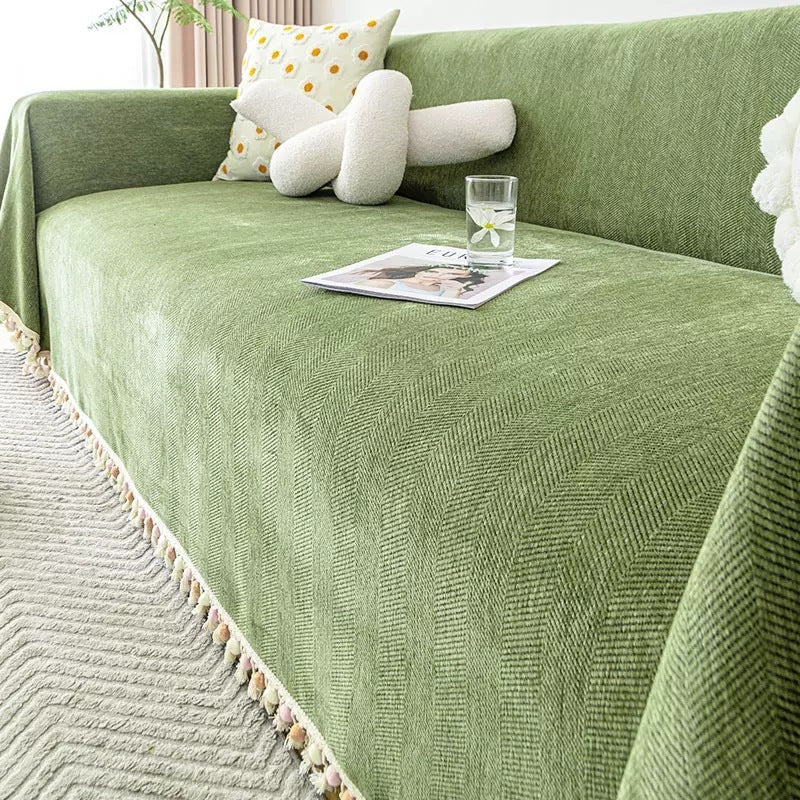
Chenille is generally known for a soft hand feel and visible texture. Depending on the yarn, weave and fibre blend, it can range from smooth and velvety to more substantial and textured. That surface can add visual depth to neutral-coloured furniture and soft furnishings.
Where Is Chenille Used in the Home?
- Upholstery: sofas, armchairs, ottomans and occasional chairs
- Sofa covers and throws: removable layers used for styling or everyday furniture protection
- Cushions: textured decorative and seating cushions
- Blankets and throws: soft furnishings for beds and lounges
- Decorative textiles: selected curtains, runners and accent pieces
Chenille Upholstery vs Chenille Sofa Covers
Chenille upholstery is attached to the furniture itself, while a chenille sofa cover is removable. A removable cover can make it easier to change the appearance of a sofa or add a separate layer over the existing upholstery. Fit, washability, protection level and care instructions depend on the individual cover, so those details should be checked product by product.
If you are specifically researching removable covers, read our Chenille Sofa Covers Australia guide.
Advantages of Chenille for Home Furnishings
Soft, Tactile Texture
The raised yarn structure gives chenille its characteristic softness and makes it useful where comfort and texture are important.
Visual Depth
Because the surface catches light differently across the pile, chenille can appear richer and more dimensional than a flat woven fabric.
Versatile Styling
Chenille can work with contemporary, minimalist, coastal and traditional interiors depending on its colour, pattern and surrounding furnishings.
Things to Consider Before Choosing Chenille
Chenille is not a single performance specification. Fibre content, weave density, backing and construction all affect how a fabric wears and how it should be cleaned. A chenille label alone does not mean a product is waterproof, stain-proof, pet-proof or machine washable.
For sofa covers, check the individual listing for dimensions, care instructions and any specific protection features you need.
How to Care for Chenille Fabric
- Follow the care label for the specific item.
- Vacuum or gently brush surface dust where appropriate.
- Blot spills rather than rubbing them deeper into the pile.
- Avoid assuming all chenille can be machine washed; fibre blends and construction differ.
- Test any cleaning method on an inconspicuous area when the care instructions permit it.
Chenille Compared with Other Sofa-Cover Materials
Chenille is often selected for texture and softness, while other fabrics may be chosen for stretch, lighter weight, easy drying or different levels of protection. The best material depends on how the sofa is used, how often the cover needs cleaning and whether a fitted or draped look is preferred.
Is Chenille Right for Your Sofa?
Chenille can be a good option when you want a visibly textured, comfortable fabric. Before buying a removable cover, measure the areas you want to protect and compare them with the dimensions shown for the specific item. Our Sofa Cover Size Guide Australia explains the main measurements to take.
You can also browse the Sofa Covers collection to compare available materials, sizes and product-specific features.
Sofa Cover Ideas for Renters & Small Apartments in Australia
Best Sofa Covers Australia 2026 | Complete Buying Guide
Continue reading

Best Waterproof Couch Covers for Dogs in Australia: What Actually Works?

Waterproof vs Water-Resistant Sofa Covers: What's the Difference?

How to Stop a Couch Cover From Sliding

Chenille vs Stretch Sofa Covers: Which Is Better?

Best Sofa Covers for Large Dogs & Family Lounges

Dog-Proof Couch Covers: What Actually Works and What Doesn't

Best Couch Covers for Muddy Paws & Wet Dogs
