

Sofa Cover Materials & Fit Guide Australia: Stretch, Chenille & Tailored Covers

Choosing a sofa cover is easier when you separate three decisions: material, fit and the level of protection you need. A cover that looks good but does not match your sofa's dimensions or your household's maintenance needs can quickly become frustrating.
This guide compares common sofa-cover materials and fit styles for Australian homes, including chenille, stretch, tailored, cotton-blend and polyester-blend options.
Start with Fit Before Fabric
Before comparing colours or textures, measure the parts of the sofa you want to cover. Check seat width and depth, backrest dimensions, arm areas and the shape of any sectional pieces.
Do not rely only on labels such as 2 seater, 3 seater or 4 seater. Sofas with the same seating capacity can have very different dimensions.
For a step-by-step approach, use our sofa measuring guide.
Common Sofa-Cover Fit Styles
| Fit Style | Useful For | What to Check |
|---|---|---|
| Stretch cover | A closer fitted appearance on compatible sofa shapes | Measurement range, elasticity and sofa construction |
| Throw or mat-style cover | Covering selected seat, back or arm areas | Individual section dimensions and grip |
| Tailored or fitted cover | A more structured appearance | Compatibility with the exact sofa profile |
| Sectional pieces | L-shaped and modular sofas | Measure every section separately |
Stretch Sofa Covers
Stretch covers use flexible fabric to adapt to a range of compatible sofa shapes. They can create a neat appearance when the measurement range and sofa construction are suitable.
Advantages
- Flexible fit across compatible dimensions
- Can create a closer, more fitted look
- Often straightforward to remove and reinstall
Considerations
- A stretch label does not guarantee a good fit on every sofa
- Unusual arm shapes, loose cushions or deep seats may affect installation
- Accurate measurements remain important
Tailored and Structured Covers
Tailored or structured covers are intended to follow the sofa's shape more closely. They can provide a more customised appearance, but compatibility is usually more important than with loose throw-style covers.
Advantages
- More structured presentation
- Can look integrated with the sofa when correctly matched
Considerations
- Less forgiving when dimensions do not match
- May take longer to fit and remove
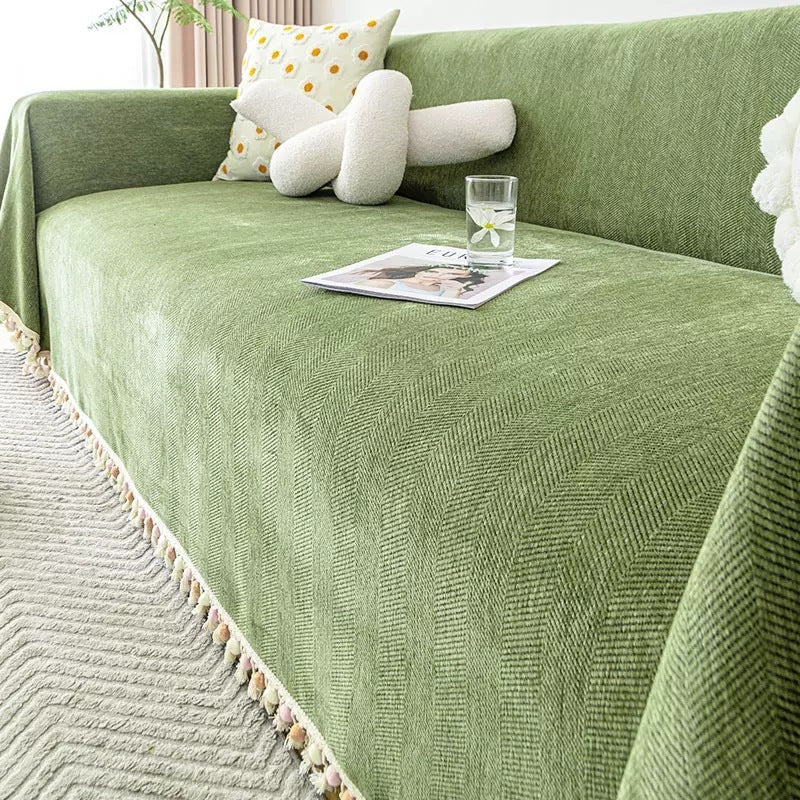
Chenille Sofa Covers
Chenille is known for its soft, textured surface and decorative depth. It can work well where comfort and visual texture are priorities.
Best Suited To
- Living rooms where a soft, substantial texture is preferred
- Homes wanting a warmer decorative finish
- Selected pet-friendly applications when the weave and care requirements are suitable
What to Check
- Fabric composition and weave
- Washability and drying instructions
- Whether the particular cover includes non-slip, water-resistant or waterproof features
Polyester-Blend Sofa Covers
Polyester blends are commonly used because they can be durable, practical and relatively easy to maintain. The feel and breathability depend on the exact blend.
Considerations
- Check whether the fabric is stretch or non-stretch
- Review care instructions rather than assuming all polyester blends wash the same way
- Compare surface texture if pet hair removal is important
Cotton-Blend Sofa Covers
Cotton blends can offer a softer, more breathable feel. Blending cotton with other fibres can change durability, stretch and drying behaviour.
Considerations
- Check for possible shrinkage in the care instructions
- Confirm whether the cover is suitable for frequent washing
- Compare weight and weave for the level of protection you need
Velvet and Plush-Style Covers
Velvet and plush-style fabrics can create a softer, richer appearance. They are often selected for comfort and visual impact rather than because of one universal performance characteristic.
If you have pets or children, consider how easily the surface releases hair, how it handles frequent cleaning and whether the product has any specific protective construction.
Non-Slip, Water-Resistant and Waterproof Are Different Features
These terms describe different functions and should not be treated as interchangeable.
- Non-slip or anti-skid: designed to help reduce movement.
- Water-resistant: designed to resist some moisture for a period, depending on construction.
- Waterproof: designed with a barrier intended to prevent water penetration under specified conditions.
Always use the individual product specifications to understand what a particular cover is designed to do.
Choosing a Sofa Cover for Homes with Pets
For dogs and cats, useful factors can include washability, weave density, ease of hair removal, grip and the amount of the sofa you want to protect.
No fabric should be assumed to be completely scratch-proof. If claw damage is a concern, combine a suitable cover with routine grooming and nail care.
See our pet-friendly sofa-cover guide for more detail.
Choosing a Sofa Cover for Families
Busy family rooms may benefit from covers that are easy to remove, reinstall and clean. Consider the frequency of washing you expect, whether food or drink spills are common, and how securely the cover needs to stay in place.
How Colour and Texture Affect the Result
Fit has a major effect on how polished a sofa cover looks, but colour and texture also matter. Neutral shades can blend easily with existing décor, while textured fabrics such as chenille can make the sofa a stronger visual feature.
Compare your choice with flooring, wall colour, curtains, cushions and natural light before deciding.
Quick Comparison
| Priority | What to Look For |
|---|---|
| Closer fitted appearance | Compatible stretch or tailored construction |
| Soft texture | Chenille, velvet or other plush surfaces |
| Frequent cleaning | Clear washable-care instructions and practical reinstalling |
| Pets | Durable weave, grip, washability and easy hair removal |
| Spill protection | Product-specific water-resistant or waterproof construction |
| Sectional sofa | Separate pieces or a design intended for sectional shapes |
Common Buying Mistakes
- Choosing by seating capacity without checking measurements
- Assuming every stretch cover fits every sofa shape
- Confusing waterproof with water-resistant
- Ignoring care instructions before purchase
- Buying for colour alone without considering grip and construction
- Assuming a pet-friendly label means scratch-proof
Frequently Asked Questions
Is chenille better than polyester for sofa covers?
Neither material is automatically better. Chenille is often chosen for texture and softness, while polyester blends can be practical and durable. Compare the exact product construction, fit and care requirements.
Are stretch sofa covers universal?
No. Stretch increases flexibility, but the sofa still needs to fall within the cover's compatible measurement range and shape.
What is the best cover for an L-shaped sofa?
It depends on how the sectional is constructed. Many L-shaped sofas are easier to cover using separate pieces for each section. Measure each section before ordering.
How can I stop a sofa cover from moving?
Choose the correct dimensions and look for product-specific non-slip or anti-skid features. Sofa surface, cover construction and daily use can all affect movement.
Explore Sofa Covers
Use material, measurements, fit style, care instructions and protection requirements together when comparing options.
Explore the Sofa Covers collection
Final Recommendation
The best sofa cover is the one that fits your specific furniture and matches how your household uses it. Measure first, then compare material, grip, protection features and care requirements before making your choice.
Ultimate Winter Sale 2026: Save 15% on Premium Home Essentials at Snug & Homely Australia
Pet-Friendly Sofa Covers Australia: Choosing Covers for Dogs & Cats (2026)
Continue reading

How to Measure a Sofa for a Cover: Size Guide | Snug & Homely

How to Clean a Couch: Fabric & Stain Guide | Snug & Homely

LuxeGuard Plush Chenille Sofa Cover: Waterproof & Pet-Friendly Guide (2026)

How to Protect Your Sofa from Dogs: Practical Guide for Australian Homes (2026)

Pet-Friendly Sofa Covers Australia: Choosing Covers for Dogs & Cats (2026)

