


How to Clean a Couch: Fabric & Stain Guide | Snug & Homely
How to Clean a Couch: The Complete Australian Guide by Fabric and Stain
A clean couch starts with the care label, not a viral cleaning hack. Vacuum first, blot spills instead of rubbing, use the least moisture your fabric allows and test any product in a hidden spot. Removable sofa covers can often simplify the job, but wash them only according to their own label.
|
QUICK ANSWER: For most everyday fabric couches, remove loose dirt with a vacuum, blot fresh spills with a clean white cloth, then use the cleaning method approved by the manufacturer. Never mix cleaning chemicals, soak the padding or apply heat to an unknown stain. |
Before you clean: identify what you are working with
Two couches that look similar may need completely different care. The upholstery may be cotton, polyester, chenille, linen, velvet, leather, faux leather or a blend. The filling underneath can also hold moisture long after the surface feels dry.
Start with the sewn-in care label or the manufacturer's care page. If the label is missing, treat the fabric as unknown: vacuum it, spot-test a tiny hidden area and avoid a wet deep clean until the material is identified. Valuable, vintage, silk, wool-rich or heavily soiled upholstery is usually a professional-cleaning job.
The safe five-step method
Read the care instructions. Check whether the upholstery or removable cover permits water, solvent cleaning, machine washing or professional care only.
Vacuum thoroughly. Use an upholstery attachment across the back, arms, seat, seams and under every removable cushion. Loose grit can become abrasive when wet.
Blot the stain. Use a clean white absorbent cloth. Work from the outside of the mark toward the centre so it does not spread.
Spot-test the approved method. Test colourfastness and texture in a hidden area, allow it to dry, then inspect it in daylight.
Use as little product and moisture as possible. Remove residue with the method allowed by the label and ventilate the room until the sofa is completely dry.
Couch-cleaning decision table
|
Surface |
Safest first action |
Avoid |
Get professional help when |
|
Polyester or performance fabric |
Vacuum; blot; follow the maker's water/solvent instructions |
Soaking, aggressive brushing, untested bleach |
The stain reaches the foam or leaves a large water ring |
|
Chenille |
Vacuum with a gentle attachment; blot in the direction of the pile; use label-approved care only |
Scrubbing, high heat, saturating the textured pile |
The pile crushes, colour transfers or the mark is oil-based and set |
|
Cotton or linen blend |
Vacuum; blot quickly; wash removable pieces only if the label allows |
Hot water, high dryer heat, uneven wetting |
There is shrinkage risk, dye transfer or a large old stain |
|
Velvet or boucle |
Vacuum gently; blot without crushing loops or pile |
Hard brushes, rubbing, generic steam advice |
The material is delicate, crushed or water-marked |
|
Leather |
Dust; use a maker-approved leather cleaner and conditioner |
Household detergents, excess water, oils not intended for leather |
The leather is cracked, stained through or colour lifts |
|
Unknown or vintage |
Vacuum and stop |
DIY chemistry or wet extraction |
Before any liquid treatment |
What you need for routine cleaning
A vacuum with a clean upholstery or soft-brush attachment
Several clean white microfibre or cotton cloths
A soft brush only if the fabric maker allows it
The manufacturer-approved upholstery cleaner, mild detergent or solvent method specified on the care label
Cool or lukewarm water only when water cleaning is permitted
A fan and good ventilation for drying
White cloths make colour transfer easier to see. Keep products simple: combining bleach, ammonia, acids, peroxide, alcohol or other household chemicals can damage fabric and may create hazardous fumes. Use one approved method at a time.
How to clean a fabric couch for everyday dust and body oils
Remove throws and cushions. Photograph the cushion layout if it is easy to forget which cover goes where.
Vacuum the entire couch slowly, including piping, folds and the platform below the cushions.
Check high-touch zones such as headrests and arm fronts. Treat only the soiled area unless the approved method calls for cleaning the full panel; cleaning a small patch of a large panel can leave a tide mark.
Apply the approved product to the cloth rather than pouring it directly onto the sofa. Blot or lightly work the surface as the label instructs.
Remove permitted residue with a second barely damp cloth, then press with a dry towel. Do not sit on the couch until every layer is fully dry.
The first 15 minutes after a spill
Fast action matters because liquid can move through the upholstery into foam, batting and timber. The goal is to lift the spill without pushing it deeper.
|
Spill |
Do now |
Then |
Do not |
|
Water, tea or coffee |
Blot immediately with a dry white cloth |
Use the label-approved cleaning method; treat the whole affected panel if needed |
Rub, oversaturate or use heat |
|
Food or sauce |
Lift solids with a spoon or blunt edge; blot liquid |
Use the approved mild cleaning method |
Grind solids into the weave |
|
Oil or grease |
Lift excess and blot without spreading |
Use the fabric-approved oil-stain method or a professional cleaner |
Add water automatically; it may spread oil |
|
Mud |
Lift excess; allow loose soil to dry if that is safer for the fabric |
Vacuum, then spot-clean as approved |
Smear wet mud across the panel |
|
Pet urine |
Blot deeply and repeatedly; remove the cushion if possible |
Use an upholstery-safe enzymatic cleaner only if the maker permits it; air-dry completely |
Use steam, heat or ammonia-smelling products |
|
Ink, dye or nail product |
Blot transfer without spreading |
Contact the manufacturer or a professional |
Experiment with multiple solvents |
How to remove couch odours
An odour usually has a source: trapped moisture, food, smoke, body oils, pet hair or urine below the surface. Masking it with fragrance does not remove that source.
Vacuum the couch, crevices and surrounding floor first.
Wash removable, label-approved covers separately from their inserts.
For a urine accident, blot and use a suitable enzymatic upholstery product only if compatible with the material. Enzymes need the dwell time and drying conditions stated on the product label.
Ventilate thoroughly. If the smell returns in humid weather or after the surface dries, contamination may be inside the foam and professional extraction or insert replacement may be required.
Bicarbonate of soda is commonly suggested online, but it is not suitable for every surface and fine powder can be difficult to remove from upholstery. Check the manufacturer's guidance before applying powders, sprays, vinegar, steam or deodoriser.
How to wash removable sofa covers
A zip does not automatically mean a cover is machine washable. Some removable covers are intended to be professionally cleaned, and the inner lining, backing, piping or dye may react differently from the face fabric.
Photograph the care label and match every cover to its cushion.
Pre-treat only with a product permitted by that label. Do not use bleach unless it is explicitly allowed.
Close zips, empty hook-and-loop fasteners and wash pieces in balanced, uncrowded loads.
Choose the labelled temperature and cycle. Cold or gentle washing is common, but the product label always wins.
Air-dry or tumble-dry only as directed. High heat can shrink fabric or affect backing. Refit only when covers and inserts are fully dry.
Rotate matching cushions after cleaning so wear and sunlight remain more even over time.
Special care for chenille sofa covers
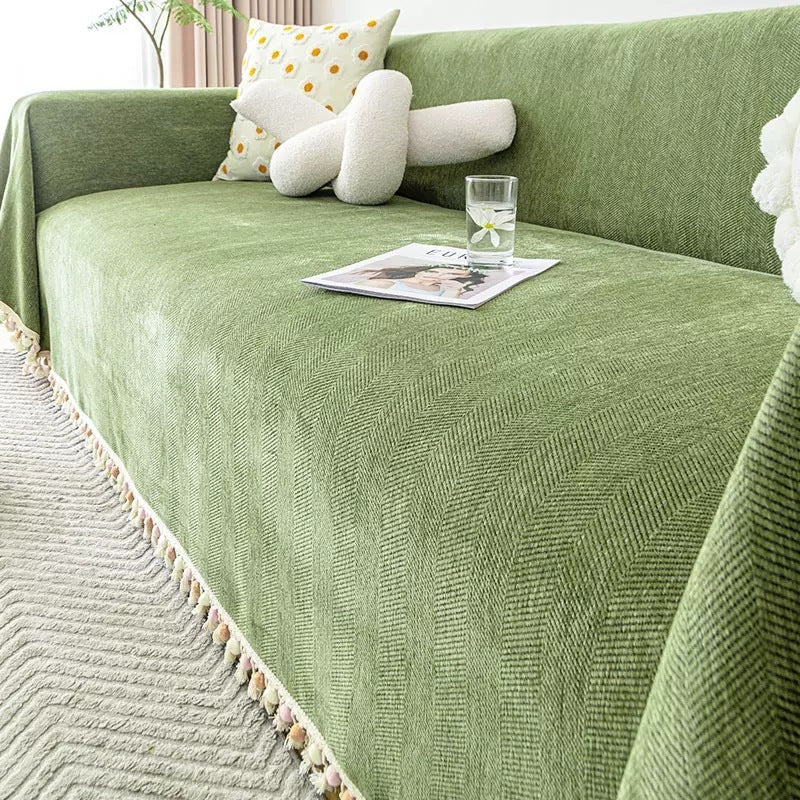
Chenille is valued for its soft, dimensional pile. That texture is also why hard scrubbing can change the direction of the fibres or leave a flattened patch. Shake out or vacuum loose debris gently, blot spills, follow the product's own wash instructions and avoid high heat unless the label clearly permits it.
Snug & Homely sells several chenille styles with different constructions, backings and size formats. Treat the care instructions on the exact product page and sewn label as authoritative; do not assume instructions for one chenille cover apply to every chenille product.
When to call a professional couch cleaner
The care label requires solvent or professional cleaning
A large amount of liquid has reached the cushion foam or frame
The couch is silk, velvet, wool-rich, vintage, colour-unstable or high value
There is mould, persistent urine odour, sewage, blood or another biological contaminant
A DIY attempt has caused colour loss, texture change or a water ring
The sofa is still damp after prolonged ventilation
How to keep the couch cleaner for longer
Vacuum before visible dust becomes embedded, especially in pet homes.
Place a washable cover over the highest-use seats, arms or chaise instead of waiting for damage.
Choose a non-slip construction on smooth leather or active family seating so protection stays in the right place.
Keep one clean absorbent cloth and the approved stain product accessible for quick spills.
Rotate cushions and protect the sofa from prolonged direct sun according to the maker's instructions.
Frequently asked questions
Can I clean a couch with dishwashing liquid?
Only if the sofa or fabric maker permits a mild water-based detergent. Use a tiny amount, test first and avoid leaving residue. A generic recipe is not safe for every upholstery type.
Can I steam-clean a fabric couch?
Only when the care instructions allow steam or hot-water extraction. Heat and moisture can shrink fabric, set some stains, damage backing or leave the inner cushion damp.
How do I clean a couch without a machine?
Vacuum, blot and use the label-approved spot-cleaning method. A machine is not necessary for routine care and can be too wet or aggressive for some upholstery.
How do I get dog or cat urine smell out of a couch?
Blot immediately. If compatible with the upholstery, use an enzymatic cleaner made for pet urine and follow its directions. Persistent odour usually means liquid has reached the insert or frame and may need professional treatment.
Can I put sofa covers in the washing machine?
Only when the exact cover label says machine washing is allowed. Removable does not always mean machine washable.
How long does a couch take to dry?
It depends on the fabric, padding, humidity, airflow and amount of moisture used. Do not use or re-cover it until it is completely dry through the affected layers.
How often should I clean my couch?
Vacuum on a routine suited to your home, and respond to spills immediately. Deep cleaning should follow the manufacturer's schedule and the level of use rather than an arbitrary universal date.
What is the easiest way to prevent future stains?
Use a correctly sized, washable protective cover on the highest-use zones and clean it according to its own label.
Protect the clean sofa
Cleaning fixes today's mess. A washable, correctly sized sofa cover can make the next spill, muddy paw or movie-night snack easier to manage. Measure first, choose the protection level that matches your household and confirm the care instructions on the exact product.
Start with the Snug & Homely sofa-cover collection, then use the measurement guide before selecting a size.
Why the LuxeGuard Plush Chenille Sofa Cover Is Australia's Favourite Waterproof & Pet-Friendly Sofa Cover (2026)
How to Measure a Sofa for a Cover: Size Guide | Snug & Homely
Related Posts

How to Measure a Sofa for a Cover: Size Guide | Snug & Homely

Why the LuxeGuard Plush Chenille Sofa Cover Is Australia's Favourite Waterproof & Pet-Friendly Sofa Cover (2026)

How to Protect Your Sofa from Dogs: The Ultimate Guide for Australian Pet Owners (2026)

Pet-Friendly Sofa Covers Australia: The Complete Guide to Protecting Your Furniture from Pets (2026)

Best Sofa Covers Australia: The Complete 2026 Buying Guide

Ultimate Winter Sale 2026: Save 15% on Premium Home Essentials at Snug & Homely Australia
