


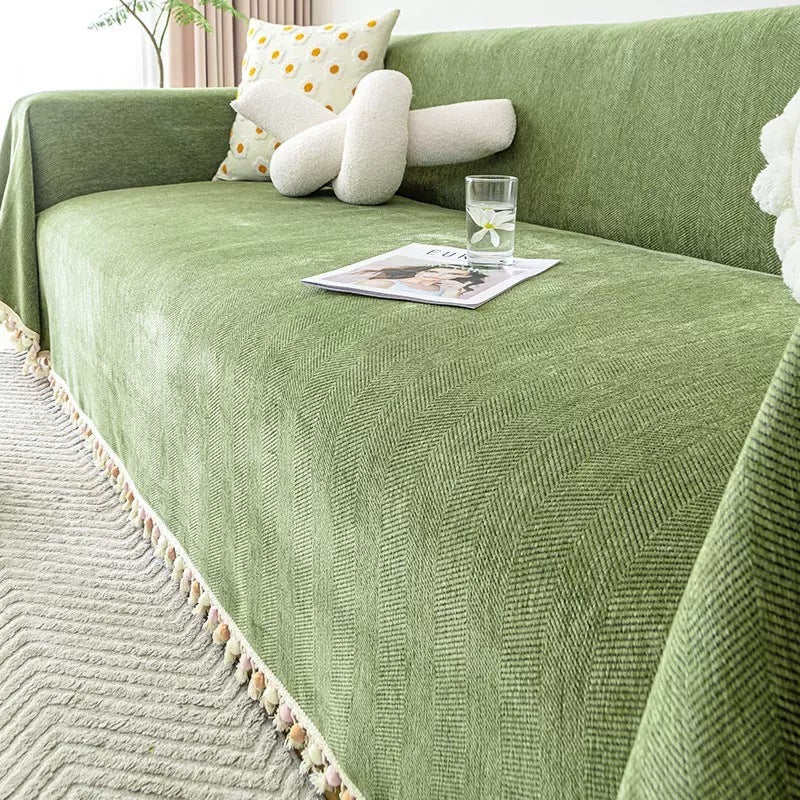


A Second Sofa Cover Set for Summer: Plan a Practical Wash-Day Rotation

By Snug & Homely
A second sofa cover is useful when it keeps an important seating area covered while the first is being cleaned and dried. It does not have to mean buying a duplicate of every piece on the lounge. For many homes, one correctly sized spare for the busiest seat is a more practical purchase than a complete second set.
Before summer gets busy, think about the part of your sofa that needs cleaning most often, the washing instructions you can follow and the space available for drying and storage. Those details determine whether a rotation system will make life easier or simply add another textile to the cupboard.
This guide helps Australian households decide when a second cover is worthwhile, how to choose the right rotation pieces and how to compare MuMold, SoftBlend Luxe and Chenille Light Luxury for that role. It also explains how current multi-buy offers fit into a useful purchase plan without encouraging you to buy more pieces than you need.

Identify the problem a spare would solve
Start by recalling the last time you removed your sofa cover. Was the seat left uncovered for several days? Did the family avoid the sofa while the textile dried? Or was the cover back in place quickly, making a spare largely unnecessary? Your own experience is a better guide than the idea that every household needs two sets.
A spare can be valuable when a particular seat is used throughout the day or when pets repeatedly choose one corner. It can also help when a large cover needs a suitable air-drying space that is not always available. These are specific routine problems that a second piece may address.
If the main cover rarely comes off, a complete second arrangement may not provide much practical benefit. You may prefer to keep the budget for a better-fitting primary cover or for another household priority. A spare is an optional tool, not an essential feature of a well-styled living room.
Define its job before browsing: “replace the main seat piece during washing” is clear enough to guide size and fabric selection. “Have another one just in case” needs more thought. The clearer the job, the easier it is to avoid buying a piece that cannot actually replace the area you care about.
Decide between a spare piece and a second full arrangement
A spare piece is intended to stand in for one part of the main arrangement. A second full arrangement replaces several surfaces together. The first usually requires less storage and a smaller outlay; the second can provide a more consistent appearance while everything is being cleaned.
Choose a spare piece when wear and mess are concentrated on a particular seat or chaise. There is little reason to duplicate rarely touched backrests if they do not share the washing schedule. Label the spare for its intended position so it does not become confused with a smaller decorative piece.
A second full arrangement can make sense when the entire primary cover comes off regularly, when the sofa’s exposed colour is strongly different from the chosen look, or when you want two deliberate styling schemes. Check that both arrangements fit the furniture and suit your maintenance routine independently.
Avoid assuming that a multi-buy quantity is a complete set. Separate-piece products can require different seat, arm and back dimensions. A four-item purchase might be one useful arrangement, two seat-and-spare combinations or something else entirely. Use a coverage map rather than the quantity alone to define what you are buying.
Measure the replacement job accurately
Take measurements from the actual sofa area, not only from an old cover that may have changed shape after washing. Record the width, depth and desired drape for the surface you want the spare to replace. Then compare those requirements with the selected product’s dimensions and guidance.
If the spare will replace a main seat piece, it needs to provide the required seat coverage. A smaller textile may look similar when folded in a cupboard but leave a large exposed edge once in use. If it is intended only for a pet’s resting spot, a different size may be appropriate.
Use the sofa size guide to confirm the relevant measuring approach. An unfitted drape and a sectional cover do not create the same result simply because both are rectangular. Think about how the replacement will sit, where it will overlap and whether the original upholstery remains visible.
Write the chosen size beside its role in the shopping list. For a modular lounge, also identify which section it belongs to and which direction it faces. A clear record makes a rotation system easier for everyone in the household to use, especially when several cover pieces have similar colours.
Match care requirements to the way you wash
A convenient rotation depends on following the correct care instructions, not on washing every cover in the same way. Fabric names alone do not establish a suitable temperature, cycle, detergent or drying method. Read the current product page and any label supplied with the item.
SoftBlend Luxe specifies neutral detergent, water under 30°C, hand washing or a gentle machine cycle, and air drying. It advises against high temperatures, prolonged soaking and bristle brushes. A spare from the same product line can make the routine easier to remember, but you should still follow the information for the item received.
Chenille Light Luxury describes gentle machine washing. MuMold is listed as machine washable, with silicone-particle anti-slip backing. Where exact details such as water temperature or drying method are not supplied, ask for clarification rather than borrowing another product’s instructions.
Do not combine several products into one wash merely because they were bought together. Colours, trim, backing and care directions can differ. A bundle offer is a purchasing arrangement; it is not a shared care label. Keep the routine simple by choosing products whose actual instructions you can follow consistently.
Think about machine capacity and handling
Before buying a large second cover, consider how you will wash the first one. A household machine has limits, and a textile’s size and wet bulk can matter as well as its dry appearance. Check your appliance guidance and the product’s care information rather than assuming machine washable means suitable for every machine.
Several separate pieces can give you flexibility to clean the busiest area independently, provided the instructions allow it. One large drape can create a continuous appearance but may be more cumbersome to remove and handle when wet. Neither format is automatically better; the practical choice depends on your setup.
Think about who will manage the routine. A heavy or awkward textile may be inconvenient for someone who needs an easy-to-remove layer. If removal becomes a chore, the cover may stay in place longer than intended, reducing the benefit of buying a spare.
Plan the sequence: remove the used piece, check the sofa beneath, put the clean spare in place and then wash the removed item according to its instructions. Having a simple order avoids leaving a damp textile on the sofa while searching for its replacement.
Make a realistic drying plan
A rotation system is only as useful as the space available to dry the washed cover properly. Identify a suitable area before ordering another large piece. Consider ventilation, shade where required, the room needed for the textile and whether the area remains available during normal household activity.
Do not assume that a product can be tumble dried or exposed to high heat. Follow the individual instructions. Trying to accelerate drying for a gathering can damage a textile or its finish if the method is unsuitable. A clean spare is useful precisely because it reduces that pressure.
Avoid putting a cover back onto the sofa while it is still damp. Check folds, thicker edges and backing as well as the main surface. The sofa beneath and the cover itself should be appropriately dry before the arrangement is restored to regular use.
If your drying area is small, the most useful spare may be a manageable seat piece rather than a duplicate full-size drape. This is a good example of choosing around a real household constraint. The goal is a routine that works repeatedly, not simply having two attractive products available on the first day.
Choose whether the two looks should match
Matching covers can make rotation visually seamless. This is useful if the sofa is the room’s main colour anchor and you want it to look consistent while one layer is being cleaned. Check that the required colour and size are available for both pieces before ordering.
Coordinating covers can also work well. You might use a quiet blend for one arrangement and a textured chenille piece for the other, as long as each works with the room and provides suitable coverage. The choice should be deliberate rather than the result of buying whichever spare happens to be on offer.
Look at the floor, curtains, rug and exposed upholstery. If those elements are already busy, two restrained options may be easier to rotate. If the room is simple, a more expressive second look can provide variety without requiring new accessories.
Keep colour-matching expectations realistic when replacing an older cover. Lighting, screens, wear and textile batches can affect appearance. A saved product name is a useful reference, but it does not guarantee an exact visual match to an item that has already been used and washed.
Compare three practical product approaches
MuMold is described as a chenille sofa towel with a plants-and-flowers motif and silicone-particle anti-slip backing. It can be considered when you want a textured draped layer with a stated backing feature. Check compatibility with your upholstery and follow the current product-specific care information.
SoftBlend Luxe has a cotton, polyester and viscose composition with a cotton-linen feel. Its more detailed washing guidance can help buyers decide whether it fits their routine before purchasing. It is supplied as one selected sofa cover, not a pre-selected complete arrangement with every accessory shown.
Chenille Light Luxury provides individual chenille pieces with an anti-slip back. That format can be useful when you want to rotate only a particular seat section. Its listing makes clear that a full sofa may need separate seat, back and arm pieces, so count the replacement job carefully.
Use the sofa-cover collection to compare these approaches against the same measurements. The relevant question is not which has the most impressive name. It is which product can replace the required area, suit the room and fit the care routine you will actually follow.
Consider backing and upholstery compatibility
An anti-slip backing can help reduce movement, but it does not establish compatibility with every sofa finish or guarantee that a cover never shifts. The original upholstery, fit, placement and use all contribute to the result. Check guidance for both the cover and the sofa, particularly on delicate or coated surfaces.
MuMold’s listing specifically describes silicone particles on the backing. That is a product feature worth checking if you want grip, but it should not be turned into an unsupported claim that it is safe for every leather or fabric finish. Ask for clarification where compatibility matters.
Keep the sofa and cover clean and appropriately dry. Do not use unapproved adhesive tape, sprays or improvised fixings to force a spare into place. A replacement that only works with potentially damaging additions may not be the right product for that sofa.
If the spare has a different backing from the primary cover, test its placement according to the relevant guidance before relying on it for everyday use. A rotation should remain practical when either piece is on the sofa, not only when the preferred one is available.
Plan for the mess your household actually produces
Different households need different routines. A sofa used mainly for evening reading may need occasional attention, while a family lounge shared with pets can collect hair, crumbs and everyday marks more frequently. Choose a rotation plan around that real use rather than a fixed washing schedule invented for every home.
Remove loose debris using a method suitable for the textile. Deal with spills promptly and check the underlying upholstery if liquid may have passed through. The chenille and blended products discussed here should not be assumed waterproof simply because they provide a removable layer.
A spare does not eliminate the need to care for the main sofa. Check exposed areas, seams and the places where pieces overlap. Keep pet grooming and appropriate scratching alternatives part of the household routine rather than expecting a cover to resist every claw or accident.
Avoid strong stain-removal methods without checking the care directions. A cover that can be removed is not automatically resistant to bleach, scrubbing or high temperatures. The existing couch-cleaning guide can help frame general care decisions, while product labels remain the reference for the selected textile.
Store the spare so it is ready to use
Choose a dry storage location that can hold the spare without excessive compression or contact with dirty household items. Store it only when fully clean and dry. The purpose is to have a ready replacement, so avoid putting it away in a condition that requires another wash before use.
Label the size and intended sofa section in a simple way. A note such as “main seat, long edge across front” can be enough. If the fabric has a particular orientation or care requirement, keep that information with it so another person can manage the rotation confidently.
If you have several pieces, group them by arrangement rather than leaving a mixed pile of similar rectangles. That makes it easier to see whether the complete replacement is ready. It also reduces the chance of using a small backrest piece as an inadequate substitute for the seat.
Review the system after a few uses. If a spare never leaves storage, you may not need to expand the rotation. If one seat is repeatedly left uncovered during washing, an additional correctly sized piece may have a clearer purpose. Let actual use guide future purchases.
Understand the cost of a useful rotation
Build a basket around the pieces you need. A spare for one seat and a full second arrangement are different purchases, so compare their total cost and practical benefit. Use the selected-variant prices rather than the lowest price displayed for an entire product range.
The current automatic offers list 5% off two or three eligible sofa-cover items and 10% off four or more. Confirm eligibility and the discount applied in the cart. A rotation purchase can fit those tiers, but reaching a larger tier should not become the main reason for buying more textiles.
For example, if three pieces cover the main arrangement and a fourth correctly sized spare solves a frequent wash-day problem, the extra piece has a clear role. If the fourth item has no likely use, the larger percentage does not make it a practical saving.
Keep future replacement expectations sensible. Products, colours and sizes can change over time. Buying a considered spare now can simplify an existing routine, but stocking several unused pieces for a hypothetical future need may tie up money and storage without providing a daily benefit.
Keep the first rotation deliberately small
Try the routine with the pieces that have a clear job before expanding it. Note whether the spare actually stays in use during drying, whether its size provides adequate coverage and whether storing it remains convenient. These observations are more useful than planning several future sets at once. If the first spare solves the problem, the system may already be complete. If a different area repeatedly needs attention, use that experience to guide a later measured purchase.
Compare current product options
Open each product to check current sizes, selected-variant prices, availability and care instructions. Choose the dimensions you need before adding to cart.

MuMold – Modern Chenille Sofa Towel with Anti-Slip Backing
Chenille with a plants-and-flowers motif and silicone-particle anti-slip backing. The listing describes machine washing. Confirm upholstery compatibility and the current care instructions.

SoftBlend Luxe Sofa Cover
A cotton, polyester and viscose blend with a cotton-linen feel. The listing specifies water under 30°C, gentle washing and air drying. One selected cover is supplied.

Chenille Light Luxury High-End Sofa Cover
Separate chenille pieces with an anti-slip back. One item is one selected cover piece; plan seats, backs and arms individually. The listing describes gentle machine washing.
Frequently asked questions
Do I need two complete sofa-cover sets?
No. Some households benefit from a full rotation, while others need only one spare seat piece or no spare at all. Base the decision on washing frequency, drying space, the areas that get dirty and your budget. A second arrangement should solve an identifiable problem rather than fulfil a general rule.
Can I use a different fabric as the spare?
Yes, if it provides the required coverage, suits the sofa and has care instructions you can follow. Keep its washing routine separate where necessary. Different products may drape or grip differently, so do not assume they behave identically because the listed dimensions are similar.
Does machine washable mean I can use a hot cycle?
No. Read the specific instructions for temperature, cycle, detergent and drying. SoftBlend Luxe, for example, specifies water under 30°C and gentle treatment. Other listings may provide less detail, in which case clarification is preferable to guessing. The machine-washable label does not override individual care requirements.
How often should I rotate the covers?
Rotate when the used piece needs cleaning or when you want to change the arrangement. There is no single schedule that suits every household. Consider actual use, visible dirt, spills, pets and the product’s care guidance. Keep the process practical enough to follow consistently.
Will a spare protect the sofa from every pet accident?
No. A removable textile can help manage everyday surface use, but the products discussed here should not be assumed waterproof or scratch-proof. Read any protection claim on the individual listing and its limits, respond to spills promptly and check the upholstery beneath when necessary.
Should I wash the spare before using it?
Follow the instructions supplied with the item and inspect it before use or washing. If you prefer an initial wash, include time for the permitted method and complete drying. Read the current return conditions first, because using or washing an item may affect a change-of-mind return request.
Build a rotation that earns its place
A useful second cover makes a regular task easier. Choose the right replacement area, measure it carefully and match the textile to the way you wash, dry and store household fabrics. Start with a modest plan and expand it only if experience shows another piece would help.
Compare the products below, review their current dimensions and care requirements, and choose the spare or second arrangement that will be ready when your main cover comes off.
Need a Sofa Cover Soon? Check Fit, Stock and Delivery Before You Buy
Tonal Sofa Styling: Build a Premium Look with Layered Texture
Continue reading

LuxeFit vs MuMold vs Velvet Era: Compare Three Chenille Sofa Covers

Reversible Sofa Cover or Separate Chenille Pieces? Sucre Compared

Floral vs Geometric Sofa Covers: Persian Floral and Jacquard Compared

Cotton Gauze vs Chenille Sofa Covers: Florence Bloom and LuxeFit

Tonal Sofa Styling: Build a Premium Look with Layered Texture

Need a Sofa Cover Soon? Check Fit, Stock and Delivery Before You Buy
