


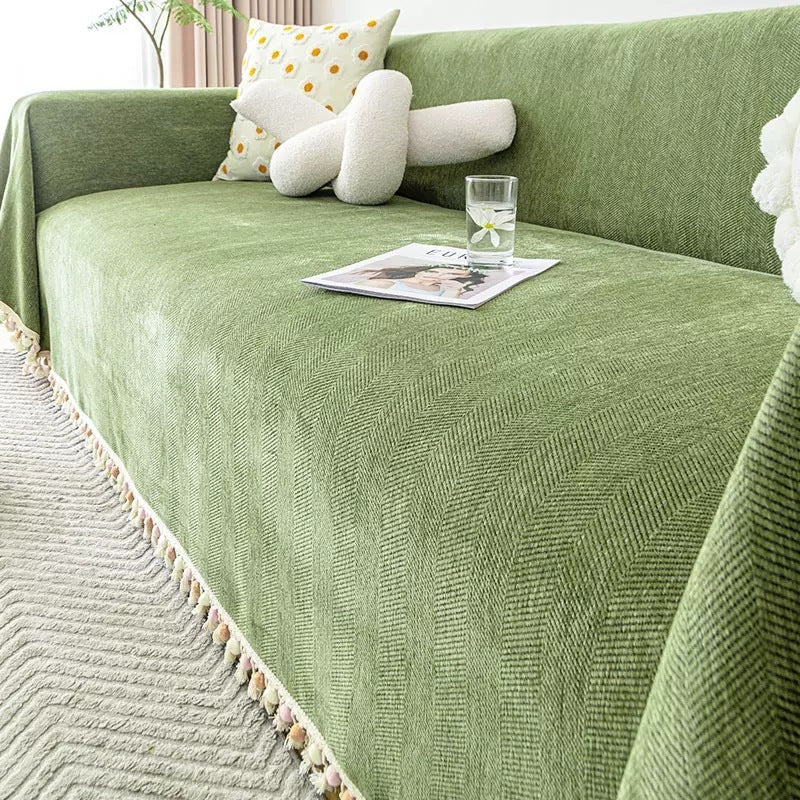


ChenilleEase Slipcover: A Removable Layer for Dust and Everyday Seat Wear

The sofa is one of the few surfaces in a home that receives people, clothing, bags, crumbs and quiet hours of everyday use. Even when nobody has spilled a drink, the favourite seat can gradually look more lived-in than the rest of the room. A removable cover is useful when you want a surface you can lift away rather than treating the entire sofa as one difficult-to-access object.
ChenilleEase is a soft chenille slipcover offered in individual sizes and several colours. Its current listing describes anti-slip capabilities and a role in protecting against dust and ordinary wear. For an Australian household that uses the lounge every day, the main attraction is straightforward: add a comfortable outer layer, then remove it when you need access to either the cover or the furniture beneath.
That benefit works best when the arrangement is planned properly. A single piece does not automatically create the complete coordinated sofa shown in a room image, and the word slipcover does not mean every option is a fitted stretch skin. The size you choose and the surfaces you cover determine the result.
This guide approaches ChenilleEase as an everyday household tool. It considers where dust and contact accumulate, how to choose individual rectangles, how colour affects visible debris and what cleaning information you should confirm before making it part of your routine.
The product information that matters first
The current product page lists chenille fabric, anti-slip capabilities and individual-piece coverage. The available colours are Green, Beige, Blue, Coffee and Grey. Size options are grouped around 70 cm, 90 cm and 110 cm dimensions with several lengths.
The packing list states one sofa cover. Display cushions are not included, and the styled photographs do not represent a pre-selected full set. The listing does not provide a precise wash method or temperature in the information reviewed for this guide.
In this guide
- The product information that matters first
- 1. Identify the busiest surfaces instead of covering at random
- 2. What a removable layer changes about dust
- 3. Ordinary seat wear and what the cover cannot repair
- 4. Softness is a useful benefit when the lounge is used for hours
- 5. Select rectangles that include useful allowances
- 6. Keep the coverage plan easy to remove
- 7. How anti-slip capabilities fit into the routine
- 8. Choose colour with visible debris in mind
- 9. Confirm cleaning requirements before building a habit around washing
- 10. Create a manageable maintenance rhythm
- 11. What to consider in homes with children or pets
- 12. A simple hypothetical seat-first plan
- 13. Compare the order you will receive with the result you expect
- Frequently asked questions
- Make the removable layer useful in your own home
1. Identify the busiest surfaces instead of covering at random
Begin by looking at the places people actually use. The favourite seat may receive more contact than the other two cushions combined. An arm beside a side table may be touched repeatedly, while the backrest facing the wall remains comparatively quiet. A useful cover plan reflects that pattern.
You may decide to cover the whole seating run for a consistent appearance. Alternatively, you might prioritise one seat and two arms. The individual-piece format allows that distinction, provided you are comfortable with the original upholstery remaining visible elsewhere.
Think about objects as well as people. A bag placed on the same end of the sofa, a reading blanket or clothing worn outside can contribute ordinary surface debris. This is not a reason to turn the lounge into a restricted zone; it is a reason to choose a manageable layer where it is useful.
Take a photograph before buying and mark the areas you want covered. Keep the goal specific: perhaps a softer seating surface, a coordinated colour change or easier access for routine cleaning. When you know the goal, you can judge whether ChenilleEase's format addresses it without adding unnecessary pieces.
2. What a removable layer changes about dust
An exposed textile can collect settled dust and other loose material. A cover gives some of that material a different landing surface, one you can remove from the lounge. That can make an ordinary cleaning task more accessible.
It does not make the room dust-free. Fine material can move through gaps and around edges, and the sofa's uncovered areas still need attention. The product should not be treated as an airtight enclosure, an allergen treatment or a substitute for cleaning the original upholstery.
The practical advantage is access. You can lift a piece to inspect the surface below, remove debris from a cushion gap and check whether the cover is still positioned correctly. A heavy sofa may remain in place while its removable top layer is handled separately.
Build that access into your routine. If you never lift the cover, debris can accumulate underneath without being noticed. The best use of a protective layer is to make maintenance easier to perform, not to hide the furniture permanently from view.
3. Ordinary seat wear and what the cover cannot repair
When people sit and stand, clothing and movement create contact with the surface. A removable layer can receive some of that contact instead of leaving all of it on the original upholstery. That is the sense in which it can be useful for everyday wear.
However, no specific abrasion rating or promised lifespan is supplied in the current ChenilleEase details. Durability language should not be converted into a claim that the sofa will last a fixed number of extra years. Household use, textile care and the condition of the original furniture all matter.
A cover also cannot repair loose stitching, replace worn foam or stabilise a damaged frame. If the favourite seat is uncomfortable because its cushion has lost support, the chenille surface may look fresher but the underlying problem remains. Assess comfort separately from appearance.
For an otherwise sound lounge, that distinction can help with budgeting. You can consider a surface refresh without assuming the sofa needs replacement. For a structurally tired lounge, you can recognise that a textile purchase may only address one smaller part of the issue.
4. Softness is a useful benefit when the lounge is used for hours
ChenilleEase's chenille construction is central to its appeal. A soft textured surface can make the seating area feel more inviting, particularly if the original upholstery feels comparatively coarse or has a look you no longer enjoy.
Online shopping still has a limitation: a picture cannot tell you exactly how the fabric will feel under your hand. If texture is the deciding factor, ask for clarification about thickness, weight or the feel of the selected option. Do not infer those measurements from a styled room photograph.
Think about your normal sitting position. A cover on the seat may make the most noticeable difference if you spend time reading or watching television. A backrest piece may matter more if your shoulders rest directly against the upholstery. The individual surfaces give you different places to introduce the texture.
The cover does not provide a verified cooling or warming function. Comfort varies with the room, season and underlying sofa. In an Australian home that uses fans or air conditioning, choose the fabric because you want its surface feel rather than expecting it to regulate the indoor environment.
5. Select rectangles that include useful allowances
Measure each area you intend to cover, then consider the extra fabric needed to tuck or drape. A rectangle matching only the flat seat dimensions may leave an exposed front edge or little room for stable positioning. A much larger rectangle may leave bulky surplus.
The current 110 cm family includes lengths of 110, 160, 180, 210 and 240 cm. The 90 cm family includes 70, 90, 120, 160, 180, 210 and 240 cm lengths. In the 70 cm family, the listed options include 70, 120, 150, 180 and 210 cm lengths. Use the live menu to confirm availability.
For the seat, measure from the rear gap to the front edge and add your chosen drop and tuck allowance. For an arm, follow its inside face, top and outside drop. For a backrest, measure the route over the top rather than estimating from the visible front panel.
Do not assume that a three-seater label identifies one appropriate rectangle. A deep lounge, a narrow apartment sofa and a modular run can all carry similar labels. Actual surface routes provide a stronger basis for choosing pieces than the number of people the furniture nominally seats.
6. Keep the coverage plan easy to remove
A complicated arrangement may look attractive but become inconvenient when you need to clean. If several pieces overlap heavily, removing one can disturb the rest. Consider how the layout will come apart as well as how it will look when first installed.
One longer piece across a seating run can reduce the number of visible edges. Separate pieces can allow a particular section to be lifted independently. Your preferred balance may depend on which area needs attention most often and whether the sofa's cushions move separately.
Keep an unobstructed route to cushion gaps and the original upholstery. A removable layer is most useful when you can check the furniture underneath without dismantling an elaborate arrangement. Avoid attaching the cover with improvised methods that make removal difficult or risk damage.
In a compact Australian home, also consider where the piece goes when it is off the sofa. A clean, dry storage basket or cupboard shelf can be more useful than an extra decorative accessory. The cover's practical role includes what happens between uses, not only the appearance while it is in place.
7. How anti-slip capabilities fit into the routine
The current listing describes anti-slip capabilities. This feature is intended to assist positioning, but it should be assessed alongside the sofa surface and the chosen dimensions. It does not eliminate all movement in every household.
Start with clean, dry upholstery and distribute each piece evenly. Large folds under the sitting area can feel uncomfortable and can move as people settle into the seat. A front drop that is much heavier than the rear allowance may also encourage the textile to shift.
Test the cover in the way the lounge is normally used. Sit down, lean back, stand up and use the arm. If movement is concentrated in one place, check that area's measurements and the available tuck rather than immediately pulling the whole arrangement tighter.
If you are covering delicate leather or another unusual finish, ask about compatibility. Do not use adhesive sprays, pins or unapproved grips to compensate for a mismatch. The product's anti-slip feature is a practical aid, not permission to modify either the textile or the sofa.
8. Choose colour with visible debris in mind
Colour affects appearance, including how noticeable loose fibres and everyday marks may be. A very light piece can show darker debris clearly. A very dark surface can make pale lint more visible. No colour removes the need for maintenance.
ChenilleEase is currently offered in Green, Beige, Blue, Coffee and Grey. Compare the actual gallery images with your room rather than relying only on those names. The weave and trim can contribute as much to the look as the main colour.
A medium tone may be an option worth considering if you dislike a strong contrast between the cover and common household fibres. However, there is no universal “best colour for dust”. Your own upholstery, clothing, pets and room lighting determine what is visually prominent.
Also think about how much original sofa remains exposed. A close colour relationship can make a partial arrangement feel quieter. A contrasting cover can make the layered design deliberate. Both can work, but a contrast you did not plan may look like an incomplete attempt to conceal the sofa.
View the choice under daylight and your ordinary evening lamps where possible. Product photographs and screens can shift perceived warmth. If you need to match an existing item closely, ask for further product imagery or advice before buying.
9. Confirm cleaning requirements before building a habit around washing
The current ChenilleEase description does not publish an exact washing method. That is a detail to resolve before purchase if frequent laundering is the main benefit you expect. Ask for the care label, including permitted washing and drying methods.
Do not use the instructions for MaisonSoft or another chenille cover as a substitute. Products can differ in fibre blend, backing, edge construction and finish even when both are described as chenille. Similar appearance does not establish identical care.
Once you have the correct instructions, plan maintenance around them. Consider the chosen piece size, your washing equipment if washing is permitted and the space needed for the approved drying method. The longest rectangle may require more handling than a small arm piece.
For general surface upkeep, handle the fabric gently and avoid aggressive tools that could catch its texture. Clean the original sofa according to its own label when you lift the cover. Keep those two instruction sets distinct so that treating one layer does not damage the other.
If a spill occurs, consult the relevant care guidance promptly and inspect beneath the cover where moisture may have passed through. The current listing does not establish a waterproof barrier. Do not leave a wet cover in place simply because its top surface hides the mark.
10. Create a manageable maintenance rhythm
A useful routine can begin with a quick visual check while you tidy the lounge. Look for obvious debris, a displaced edge or an object pressing against the fabric. That small check helps you identify issues before they become a larger rearranging task.
At intervals suited to your household, lift the pieces and inspect the upholstery below. There is no need to pretend every home requires the same schedule. A lightly used sitting room and a busy shared lounge receive different amounts of contact.
After approved cleaning, return the cover only when fully dry. Smooth it into the planned position and check the front drop. If several pieces are similar, a written size map can help you remember which belongs on the arm and which spans the seat.
Keep the process realistic. An arrangement that requires constant perfection may be frustrating in a busy home. Choose a level of neatness and maintenance that you can sustain, and assess whether the cover's removable format is making that routine easier.
11. What to consider in homes with children or pets
ChenilleEase is presented as suitable for everyday household protection, but the actual problem matters. Crumbs, loose hair and routine contact are different from repeated soaking, chewing or determined scratching. A soft cover should not be expected to solve every kind of mess.
For children, the practical benefit may be having a layer over the most-used seat. The piece still needs correct sizing and compatible care. Avoid suggesting that the sofa is safe from all food or drink marks, because liquids can pass through and exposed areas remain accessible.
For pets, a cover can collect some hair on an accessible surface. Claws may still snag textured fabric or reach uncovered upholstery. There is no published claw-proof rating in the product information reviewed here.
Pay attention to loose edges if a pet pulls or plays with them. Check that the arrangement remains comfortable for people and that it does not trail into walkways. Where serious liquid or scratching protection is essential, ask for specific verified product features rather than relying on a broad household-suitability statement.
12. A simple hypothetical seat-first plan
Imagine an Australian apartment with a comfortable three-seat lounge. The household likes the original back cushions but wants a softer layer over the main seating run and the arm used for reading. It chooses to assess two pieces rather than immediately covering the entire sofa.
It measures the seating run, its depth and the preferred front drop. It separately measures the arm over its contour. The chosen dimensions come from those routes, not from the sofa's three-seater name. The two pieces may require different width families.
Before checkout, the household confirms one consistent colour, the exact quantity and the care instructions. It also checks where the longer piece can be handled and dried if the supplied instructions permit washing. This keeps the planned convenience connected to the actual product.
The example is a planning illustration, not a customer testimonial or fit recommendation. Your lounge may need more pieces or a different arrangement. Starting with the surfaces that serve a clear purpose can make that decision easier to evaluate.
13. Compare the order you will receive with the result you expect
The listing states one cover piece and excludes display cushions. Translate every part of your desired arrangement into an actual cart line. If you need two arm pieces of the same size, the quantity must reflect that; a styled photo cannot supply the missing unit.
Check the price of each selected size on the current product page. Avoid treating a small rectangle's displayed price as the cost of a complete lounge setup. Review delivery information and policies before placing the order, particularly where you are uncertain about colour or dimensions.
Do not buy an undersized piece simply to reduce the initial price if it cannot cover the surface you identified. Equally, avoid adding a large rectangle that creates unnecessary surplus. The useful purchase is the one that fits the purpose, not the one with the most impressive dimension.
Keep your measurements and order details. If a fit question arises after delivery, photographs and the planned routes make it easier to explain. You can assess the product against a clear expectation rather than a vague memory of the room image.
Frequently asked questions
Is ChenilleEase a fitted stretch cover?
The current size choices and individual-piece presentation should be assessed as sectional rectangular coverage. Do not assume one piece will wrap the whole sofa like a fitted stretch skin. Check the live gallery and ask if the construction is unclear.
Will it keep all dust off my sofa?
It can provide a removable surface over the areas it covers, but dust can still reach gaps and exposed upholstery. Lift the cover and maintain the original sofa as well. It is not a sealed enclosure or a health-treatment product.
Can I machine wash it?
An exact machine-washing instruction is not published in the current product details reviewed for this guide. Confirm the care label before buying if that feature is essential, then follow the instructions for your actual cover.
What colour is best for hiding dust?
There is no universal answer. Contrast between the cover and the debris affects visibility, while lighting and household use also matter. Choose a colour you like and can maintain rather than expecting it to conceal every mark.
Are the cushions in the product photos included?
The listing says display cushions are not included. The package is one cover piece, and the full styled arrangement is not a pre-selected set. Confirm any additional items separately.
Can I cover only the seat?
Yes, that can be a sensible coverage goal if the selected rectangle fits your measured seat route and intended drop. The original back and other areas will remain visible and unprotected by that piece.
Will this fix a sofa that has become uncomfortable?
A surface layer cannot restore cushion support or repair a frame. It may change appearance and surface feel, but the underlying cause of discomfort needs its own assessment.
Make the removable layer useful in your own home
ChenilleEase is worth considering for soft texture, selectable individual sizes and an accessible layer over the surfaces you use most. Its value comes from a sensible arrangement and a maintenance routine that fits your household.
Choose the areas first, measure the required rectangles and resolve the care questions before ordering. Then use the live product page to select the current colour and size options with a clear view of what each piece will do.
Product information and sizing reference
This guide uses the current ChenilleEase Slipcover listing for product details. Review the Sofa Size Guide when planning individual pieces. The header is an AI-created room illustration; the product card displays the actual listing image.
Disclaimer
This guide provides general information. Materials, dimensions, protection features and care requirements vary by product. Refer to the individual product page for current specifications before purchasing.
Persian Floral Sofa Slipcover: Patterned Imitation Linen for a Plain Lounge
Water-Repellent Sofa Protection: A Practical Guide to the Anti-Scratching Cover
Continue reading

StriGuard Sofa Towel: Striped Cotton-Blend Coverage with Realistic Pet Protection

Stretchy Nordic Sofa Cover: A Closer Fit for Compatible Australian Sofas

Dual-Sided Geometric Jacquard Sofa Cover: Cotton Chenille with a Graphic Finish

SoftBlend Luxe Sofa Cover: Cotton-Blend Comfort and Gentle Care for Australian Homes

Water-Repellent Sofa Protection: A Practical Guide to the Anti-Scratching Cover

Persian Floral Sofa Slipcover: Patterned Imitation Linen for a Plain Lounge
