




StriGuard Sofa Towel: Striped Cotton-Blend Coverage with Realistic Pet Protection

A sofa shared with a cat is still part of the room you want to enjoy. Practical protection does not have to mean abandoning the look of the lounge or covering it with a textile you dislike. A broad patterned throw can provide an accessible layer while contributing to the room's everyday style.
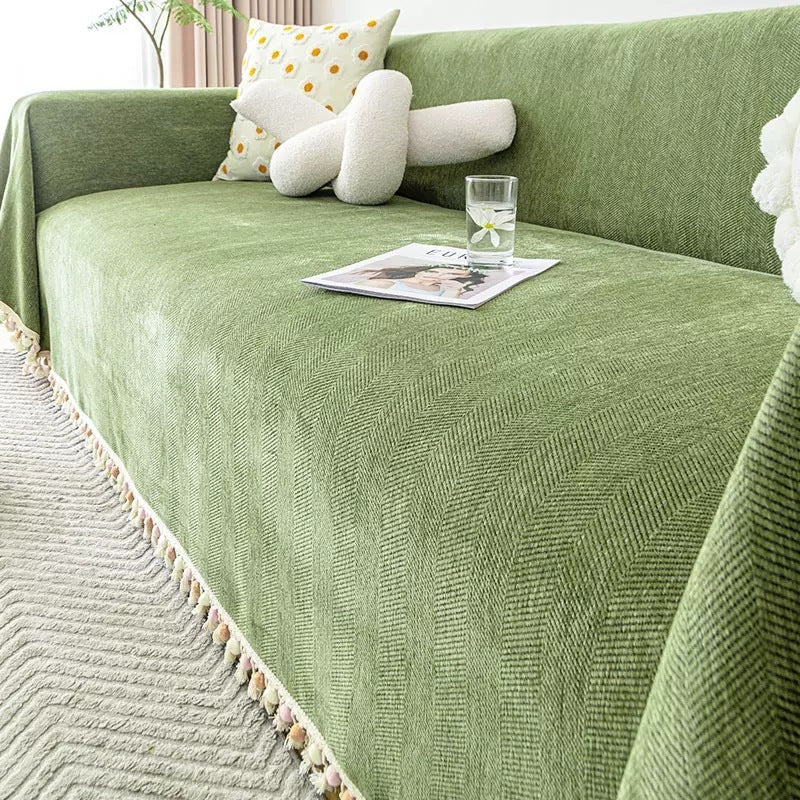
StriGuard is sold as a striped sofa towel and scratch protector. Its current product description identifies a cotton and polyester combination, a lightweight soft-touch feel and a flexible large-cover format. It is available in several named styles and lengths, allowing you to assess anything from a smaller drape to broader sofa coverage.
For an Australian pet household, the most useful benefits are realistic ones: an additional surface over selected upholstery, a piece you can lift to inspect the sofa and a decorative pattern that can belong in a normal living room. The product name should not be expanded into a guarantee that determined clawing cannot damage it.
This guide explains how to choose StriGuard around the actual layout and use of your lounge. It covers striped styling, fabric routes, pet-contact areas, care questions and order contents. The aim is a considered purchase that helps manage the room without promising that one textile can solve every kind of pet wear.
StriGuard's current product details
The material is described as a durable polyester and cotton combination. It is not listed as verified 100% cotton. The page describes a striped design, flexible draping and a lightweight surface that is easy to fold, wash and store.
The current size choices share a 180 cm dimension, with lengths of 130, 150, 180, 200, 230, 260, 280, 300, 320, 340, 360, 380 and 420 cm. Named styles include Dream of Summer, Flight diary, Four Seasons trains, Luoke Garden, Pure Story, Secret Garden and Simple semicolliculus; consult the live gallery for the actual designs.
In this guide
- StriGuard's current product details
- 1. Define the pet-contact area before choosing a cover
- 2. What scratch protection reasonably means here
- 3. Pair a cover with appropriate scratching surfaces
- 4. Cotton and polyester: use the actual blend description
- 5. Stripes can make a protective layer look deliberate
- 6. Decide how much of the original sofa should remain visible
- 7. Measure a broad throw by its fabric paths
- 8. Compare the current lengths with your plan
- 9. Make loose coverage comfortable for people too
- 10. Hair and dust: use removability as the practical advantage
- 11. Resolve exact washing instructions before purchase
- 12. Folding and storage can make the layer more flexible
- 13. A hypothetical plan for a shared cat-and-human lounge
- 14. Check the real purchase before checkout
- Frequently asked questions
- Choose a useful layer that still belongs in the room
1. Define the pet-contact area before choosing a cover
A cat may rest on the seat, stretch against a particular arm or climb across the back. Those are different contact areas. If your main concern is the outside of the arm, a beautiful seat-only drape may leave the problem untouched.
Watch the ordinary use of the sofa and mark the relevant areas on a photograph. Include human use as well. A cover placed for the cat's favourite spot still needs to be comfortable for the person who reads or watches television there.
Decide whether you want targeted coverage or a broader visual change. Targeted coverage may require less fabric and be easier to remove. Broader coverage can create a more continuous appearance, but it needs enough textile over the back and arms as well as the seat.
Keep the goal specific. “I want an accessible layer across the main seat where the cat rests” is a useful purchasing statement. “I want a cat-proof sofa” asks for a guarantee the current StriGuard description does not establish.
2. What scratch protection reasonably means here
An additional textile can receive some contact that would otherwise occur directly on the upholstery. It may therefore serve as a protective layer in ordinary use. It can also make the visible surface easier to inspect and remove.
However, claws can catch or damage fabric. Repeated scratching, pulling or digging is a stronger demand than a general scratch-protector name explains. The current product information does not supply a test rating, a guaranteed resistance level or an indestructibility claim.
A damaged cover is not automatically evidence that the sofa beneath is unharmed. Lift the textile and inspect the actual furniture when you see pulls or concentrated wear. Protection should be assessed physically, not assumed from the absence of an obvious mark on top.
If strong resistance to determined scratching is essential, ask for a product with a relevant verified specification. StriGuard may still be attractive for flexible coverage and styling, but those benefits should not replace the performance information your particular problem requires.
3. Pair a cover with appropriate scratching surfaces
A furniture textile is not a replacement for meeting a cat's normal scratching needs. RSPCA Australia explains that scratching is normal behaviour and recommends providing suitable scratching objects, with placement near targeted furniture where appropriate.
That means the cover can be one part of a room arrangement rather than the only response. A suitable scratching surface and a covered lounge serve different purposes. Do not expect changing the sofa textile alone to make every cat stop scratching.
For detailed behaviour guidance, consult the RSPCA information linked at the end of this guide. This article is about selecting a sofa cover; it does not diagnose a pet or promise a training result. Avoid treating the product image's calm cat as evidence of how your own animal will behave.
4. Cotton and polyester: use the actual blend description
The word cotton appears in StriGuard's name, but the current material detail describes polyester and cotton together. It should not be presented as confirmed pure cotton. This distinction matters if fibre composition is part of your buying preference.
The page describes a soft-touch, breathable and lightweight character. Those are supplied product characteristics, not measurements of fabric weight or a certified temperature-control function. Ask for further details if exact thickness or feel will determine your purchase.
A blended textile can be chosen for its stated appearance and practical format without adding unsupported claims about shrinkage, lifespan or environmental impact. Fibre names alone do not establish those outcomes for the finished cover.
When comparing products, record StriGuard's blend alongside the other cover's actual composition and care. A pure-cotton description elsewhere is a different specification, even if both products have a woven look. Accurate comparison helps you select the benefit you actually want.
5. Stripes can make a protective layer look deliberate
A striped or repeated design creates a visual direction across the sofa. That can help a loose drape feel planned rather than like a temporary blanket placed over a problem area. The pattern becomes part of the room's styling.
Look at which direction the visible stripes or shapes run in the actual selected design. Their appearance can change when the rectangle is rotated or folded over an arm. Choose the orientation that works with both your coverage route and the look you want.
A quiet rug and plain cushions can give a patterned throw space. If the room already contains strong patterns, compare their scale and colour. The goal is a relationship you enjoy, not an obligation to match every stripe with a new accessory.
In a smaller Australian lounge, one broad patterned textile may be enough decoration. Try it with your existing furniture before buying additional items. A cover selected for pet use can still make a deliberate visual contribution.
The named styles should be checked in the live gallery. Do not assume every option has the same colours or stripe treatment as the featured photograph. Your order needs to identify the actual variant you want.
6. Decide how much of the original sofa should remain visible
A full drape can conceal more original upholstery and make the cover the main sofa surface. It requires enough fabric in both directions, including the paths over the back and arms. It may also create more folds to manage.
A partial arrangement can leave the original back cushions or sides visible. That can be attractive if the sofa colour relates well to the chosen design. It also makes the textile's layered role obvious rather than suggesting a fitted replacement skin.
A smaller targeted layer may be sufficient for a pet's resting spot. However, it protects only that area. If a claw-contact zone is elsewhere, include it in the plan or acknowledge that it remains exposed.
Sketch your chosen edges. Mark the front drop, side drops and any rear allowance. A clear drawing keeps the size selection connected to your goal instead of relying on the largest-looking rectangle or the number of seats.
7. Measure a broad throw by its fabric paths
Across the sofa, measure the route over any arms you want covered, not only the gap between them. A rounded arm can consume fabric on the inner rise, across the top and down the outside. Those sections add up.
In the front-to-back direction, measure the intended rear drop, the route over the back, the descent to the seat, the seat depth and the front drop. Include a tuck allowance only where the supplied instructions permit it.
The repeated 180 cm dimension is fixed in the current StriGuard size range. Choosing a longer second dimension provides more textile in that direction, but it does not widen the 180 cm route. This is important for tall-backed or deep sofas.
Check both possible orientations on your sketch. A rotated rectangle may suit the measured routes differently, but it can also change how the pattern lies. Use the actual design and instructions when making that decision.
Ask whether stated dimensions include fringe if the decorative edge affects your fit calculation. Do not assume that an illustrated front drop can be reproduced on every sofa by choosing a similar seating label.
8. Compare the current lengths with your plan
The current 180 cm family includes lengths of 130, 150, 180, 200, 230, 260, 280, 300, 320, 340, 360, 380 and 420 cm. That broad selection gives several possible rectangles to investigate, but none is a universal sofa-model guarantee.
A shorter rectangle may be useful for an accent or a specific surface. A longer one may be relevant when your route includes both arms and deeper side drops. The deciding factor is the measured arrangement rather than the most generous number.
For a hypothetical plan needing 170 cm in one direction and 290 cm in the other, a 180 × 300 cm option could be a candidate to assess. You would still check tuck allowances, route accuracy and the selected pattern orientation before deciding.
If the first required route is 205 cm, that same orientation has a shortage despite the available length. Selecting 180 × 380 cm does not solve the 180 cm direction. You may need to rotate, revise the goal or consider another cover format.
The examples are hypothetical calculations, not fit recommendations. Your sofa's contours and your preferred drops determine what is suitable. Send photographs and measured routes when requesting store advice.
9. Make loose coverage comfortable for people too
A pet-oriented purchase still belongs on a sofa used by people. Spread the textile so thick folds are not concentrated beneath the main sitting area. Keep the intended surface accessible and comfortable.
Do not pull the cover only from one visible edge. That can expose the opposite side or create a heavy drop that drags the rectangle out of position. Balance the whole piece before refining the folds around arms and cushions.
The current StriGuard details do not establish a specific anti-slip backing. Do not assume movement control identical to a backed sectional cover elsewhere in the store. Evaluate how the broad throw behaves on your upholstery.
Sit, stand and move between your normal positions, then inspect the result. Some occasional straightening may be part of using a loose drape. If your main priority is a close fitted outline, compare a compatible stretch cover rather than expecting this format to behave the same way.
Keep edges clear of the floor and of moving furniture mechanisms. A loose textile should not trail through a walking route or be wrapped around recliner components without confirmed compatibility.
10. Hair and dust: use removability as the practical advantage
A broad cover can collect some pet hair and ordinary debris on an accessible surface. You can lift it away to inspect the sofa and follow the approved care method. That is a useful maintenance benefit when the original upholstery is difficult to handle in place.
It does not keep all material out of cushion gaps or uncovered areas. Periodically remove the throw and clean the furniture underneath according to its own instructions. A layer that is never lifted can simply hide accumulation.
Handle the cover carefully during removal so loose debris is not scattered unnecessarily. Use only tools compatible with the textile and any decorative edges. Strong brushing can catch fabric, and a cleaner meant for the sofa may not be appropriate for the cover.
Colour contrast can affect how visible hair appears. Light fibres may stand out against darker tones, while darker fibres can be obvious on pale areas. No named style is automatically the best for every pet coat, and a pattern should not be relied on to conceal every mark.
Choose a design you enjoy looking at and can maintain. The practical success of the cover depends more on suitable care and access than on expecting the surface to remain visually perfect without attention.
11. Resolve exact washing instructions before purchase
The product description says StriGuard is easy to fold, wash and store, but it does not publish a precise washing temperature, machine cycle or drying method in the details reviewed here. Ask for the care label before buying if routine home washing is essential.
Do not infer a hot wash from the word cotton or a machine programme from the blend alone. The finished textile, pattern and edges are part of the care decision. Another sofa throw's instructions may not apply.
Once confirmed, consider the chosen rectangle's size and the equipment required for the approved method. A very long cover can be less convenient to handle than a smaller piece. If machine washing is permitted, follow the appliance's capacity guidance as well as the textile label.
Plan how the cover will become fully dry before returning to upholstery. Use the allowed drying method and ask about heat or ironing where the label is unclear. Do not assume the phrase easy to wash permits every household laundry setting.
A clearer care answer may affect the size you select. A smaller targeted arrangement that is straightforward to maintain could be more useful than a broad full drape you are reluctant to remove.
12. Folding and storage can make the layer more flexible
The listing presents StriGuard as easy to fold and store. That can be useful if the cover is removed for guests, cleaning or a different room arrangement. A textile that has a defined place off the sofa is easier to manage than one left in a pile.
Store it clean and fully dry. Avoid folding away a damp area simply because the surface looks neat from a distance. Follow any label guidance that affects storage or decorative edges.
In an apartment, a cupboard shelf or suitable basket may be enough, depending on the selected size. Think about the longest option's bulk before ordering solely for maximum coverage. Storage is part of the daily practicality, especially where space is limited.
The product is also described as multifunctional, but this guide focuses on its sofa use. If you move the same textile between different surfaces, consider whether it needs cleaning before it returns to the lounge. Its role as an accessible layer should support your routine rather than add an unclear collection of uses.
13. A hypothetical plan for a shared cat-and-human lounge
Imagine a household with a straight sofa and a cat that usually rests at one end. The household wants a patterned layer across the seats, while leaving the original back cushions visible. It also knows the outside arm is a separate scratching area.
It measures the intended seat route and front drop, checks the available rectangles and confirms care. It does not assume that covering the resting area automatically protects the outside arm. That second concern remains a separate layout and scratching-surface decision.
The selected style is checked against the actual gallery and the room's existing rug. The household reviews the total price and quantity on the live page and understands that decorative cushions shown nearby are not identified as included items.
This is a hypothetical planning example, not a customer testimonial or protection test. It shows how to separate appearance, resting-area coverage and determined scratching rather than expecting one broad promise to settle all three.
14. Check the real purchase before checkout
Confirm the selected style, dimensions and quantity. A room photograph can show a generous drape, but the size menu determines the rectangle you will receive. If you need a second piece or another sofa covered, include that explicitly.
Compare the current price for your actual option. Review delivery information and store policies on the live page. Those details can change and should not be taken from an older blog or search result.
Do not automatically buy the longest size because it seems more protective. Surplus material can create folds, storage demands and floor-level drops. The most useful rectangle is the one that serves your measured plan.
Equally, a smaller price is not good value if the piece misses the area you wanted to cover. Keep the purpose, dimensions and care together as one decision. That is a stronger basis for buying than an attractive photograph or an ambitious protective name.
Frequently asked questions
Is StriGuard made from pure cotton?
The current material description lists polyester and cotton together. The word cotton in the product name should not be expanded into a verified 100% cotton claim.
Will it stop my cat scratching the furniture?
A sofa cover is not a guaranteed behaviour solution. The current product details do not establish that every cat will stop scratching or that the fabric is claw-proof. Appropriate scratching surfaces serve a separate role.
Is there a waterproof barrier?
A verified waterproof specification is not provided in the current details reviewed for this guide. Treat spills promptly and inspect the upholstery underneath if liquid may have passed through.
Does it have anti-slip backing?
The current StriGuard description reviewed here does not list a specific anti-slip backing. Assess the broad drape on your furniture and ask for clarification if grip is essential to the purchase.
Can I machine wash it?
Exact machine-washing instructions are not published in the reviewed details. Request the care label before buying if this is important, then follow the method supplied for the actual product.
Which style should I select?
Use the live gallery and selector together. The names do not fully describe the colours or pattern treatment. Confirm the actual variant image rather than assuming every option matches the featured photograph.
Can the longest rectangle fit any large lounge?
No. Both fabric routes matter, and the repeated 180 cm dimension remains fixed. A long option cannot automatically cover a deep sofa, tall back or L-shaped configuration.
Choose a useful layer that still belongs in the room
StriGuard is an option for striped styling, a listed cotton/polyester blend and broad flexible coverage. Its removable format can help you access both the textile and the sofa, while its pattern can make a practical purchase feel visually deliberate.
Measure the real contact areas, confirm care and keep scratch expectations realistic. Then select the current style and rectangle that suit your lounge, rather than treating the product name as a promise of complete pet protection.
Product information and further reading
The current StriGuard sofa towel listing supplies the product facts used here. Refer to the Sofa Size Guide for measurement help. For scratching guidance, read RSPCA Australia: Why does my cat scratch the furniture?.
The header is an AI-created styling illustration, not a scratch-resistance test. The buying card uses the actual product photograph.
Disclaimer
This guide provides general information. Materials, dimensions, protection features and care requirements vary by product. Refer to the individual product page for current specifications before purchasing.
Continue reading

Stretchy Nordic Sofa Cover: A Closer Fit for Compatible Australian Sofas

Dual-Sided Geometric Jacquard Sofa Cover: Cotton Chenille with a Graphic Finish

SoftBlend Luxe Sofa Cover: Cotton-Blend Comfort and Gentle Care for Australian Homes

Water-Repellent Sofa Protection: A Practical Guide to the Anti-Scratching Cover

ChenilleEase Slipcover: A Removable Layer for Dust and Everyday Seat Wear

Persian Floral Sofa Slipcover: Patterned Imitation Linen for a Plain Lounge
