


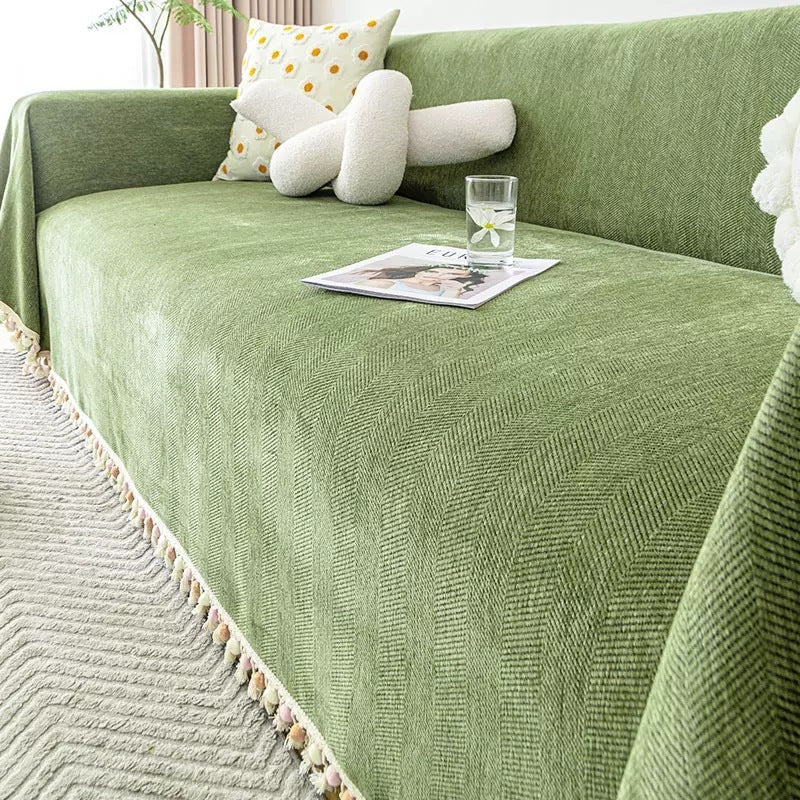


SoftBlend Luxe Sofa Cover: Cotton-Blend Comfort and Gentle Care for Australian Homes

If your ideal sofa cover is defined more by how it feels than by a dramatic colour change, the material description deserves close attention. A soft, woven-looking layer can make a familiar lounge more inviting, but the care routine needs to fit your home as well.
SoftBlend Luxe is a sofa cover described as a blend of cotton, polyester and viscose, with a cotton-linen feel. It offers individual pieces in Beige, Grey and Sky Blue. Its current page also supplies unusually useful care detail: neutral detergent, water under 30°C, hand washing or a gentle machine cycle, and air drying.
For an Australian household, that information helps turn a vague promise of easy maintenance into a practical decision. You can consider your washing machine, available drying space, the size of each piece and the way the lounge is used. A cover that looks attractive but conflicts with your laundry habits may be less convenient than you expected.
This guide focuses on those material and care benefits. It explains what the listed blend means, how to select the narrow rectangular pieces, how to introduce the finish into a room and how to follow the product's instructions without inventing stronger protection features.
SoftBlend Luxe at a glance
The listed composition is approximately 40–45% cotton, 45–50% polyester and 10% viscose fibre. These are the ranges supplied on the product page, not a laboratory certificate reproduced in this guide. The description says cotton-linen feel; it does not list linen fibre as part of the composition.
The current colours are Beige, Grey and Sky Blue. Sizes use a 70 cm dimension with lengths of 70, 90, 120, 150, 180, 210 and 240 cm. The packing list states one sofa cover, and the display cushions are not included.
In this guide
- SoftBlend Luxe at a glance
- 1. Choose the blend for its stated character
- 2. Cotton-linen feel is a texture description
- 3. A comfortable layer without a complete sofa transformation
- 4. Measure carefully because the 70 cm dimension is fixed
- 5. Use a piece schedule for a coordinated order
- 6. Beige, Grey or Sky Blue: make the colour work with the room
- 7. Gentle care is part of the product benefit
- 8. Set up a wash that follows the under-30°C instruction
- 9. Plan air drying in an Australian home
- 10. Keep routine surface care gentle
- 11. Protection expectations: what is and is not listed
- 12. Decide whether the laundry trade-off suits you
- 13. A hypothetical plan for a softer reading seat
- Frequently asked questions
- Choose softness with a care plan you can follow
1. Choose the blend for its stated character
Material labels are most useful when they help you compare actual products. SoftBlend's page lists three fibre types and describes a soft cotton-linen feel. That gives you a more specific starting point than a generic promise of luxury.
Cotton, polyester and viscose are each part of the supplied description, but the performance of the finished textile also depends on its construction and finish. Do not assign a guaranteed drying speed, shrinkage rate or lifespan solely from the fibre names. Those measurements are not provided.
The listed percentages are ranges for cotton and polyester alongside a stated viscose share. If an exact composition is important to your purchase, request confirmation for the selected variant. Do not treat every combination of the range endpoints as a separate exact recipe.
A practical way to compare covers is to write down the material, format and care method for each. SoftBlend may appeal because you want this stated blend and its gentle-care routine. Another cover may offer a different backing or wider rectangle. The most suitable choice depends on which of those details matters in your home.
2. Cotton-linen feel is a texture description
The phrase cotton-linen feel describes an intended surface character. It should not be shortened to “linen cover” when discussing this product, because linen is not among the listed fibres. The distinction keeps the buying decision grounded in the current page.
You might be looking for a softer alternative to a coarse original upholstery or a woven appearance that sits comfortably with timber furniture. Those are reasonable visual and tactile priorities. They do not require the product to be pure linen to be worth considering.
However, an online image cannot fully communicate the hand feel. If you strongly prefer a smooth surface, a dense weave or a lightweight layer, ask for further information. Words such as soft and luxe express the product's positioning but do not replace measurements of thickness or weight.
The actual product gallery is also important because details such as edging and decorative motifs contribute to the appearance. Choose the selected option as shown, rather than assuming every cotton-blend cover is plain or has the same trim.
3. A comfortable layer without a complete sofa transformation
SoftBlend can be considered as an added surface on particular areas of a lounge. You might want it on the seating run, an arm or a backrest section while retaining the original upholstery elsewhere. The individual sizes support a more selective approach.
That can suit a room where the sofa colour is already acceptable. Instead of disguising the entire piece, you introduce a different texture where it is most noticeable. A partial arrangement may also preserve the sofa's original shape and visual balance.
If your aim is to conceal a colour completely, assess whether the available rectangles can achieve that result. SoftBlend's current options have a 70 cm dimension. That may be useful for certain surfaces, but it should not be assumed sufficient for every deep seat or continuous over-the-back drape.
Separate the surface benefit from structural comfort. A cover may change the feel and look of the top layer, but it cannot replace worn cushion filling or repair a sagging base. Decide which problem you are solving before treating a textile refresh as a complete furniture solution.
4. Measure carefully because the 70 cm dimension is fixed
The current size family is 70 × 70, 90, 120, 150, 180, 210 and 240 cm. The second measurement changes the length of the rectangle. It does not make the repeated 70 cm direction wider.
For a seat, measure from the rear gap to the front edge and add the drop you want. Include any tuck permitted by the installation guidance. If that route is longer than 70 cm, choosing a 240 cm length does not solve the depth shortage in the same orientation.
For an arm, follow the actual curve or square contour. A narrow-looking arm can use substantial fabric because the cover travels over its inner face and top before dropping down the outside. The straight external width alone is not the route you need.
For a backrest, decide whether the piece will cover only the front, pass over the top or extend down the rear. Each arrangement uses a different amount of material. Make those choices explicit instead of hoping the piece will adapt after arrival.
Use the store's sofa size guide and ask for advice if a planned route is close to the available dimensions. The narrow family is a feature to plan around, not a reason to stretch expectations of a non-fitted rectangle.
5. Use a piece schedule for a coordinated order
Write one row for each planned area: seat, arm, back or other surface. Record the measured route, selected size, colour and quantity. This makes the order easier to review and prevents the styled room photograph from becoming an assumed package list.
If two arms require the same rectangle, that means two units. If the seat and back use different lengths, they are separate size selections. One sofa cover in the packing list does not automatically include all those areas.
The listing also states that cushions shown in the photographs are display items. If you want separate cushion covers, check that they are available as distinct products and confirm their dimensions. Do not select a sofa-cover variant expecting an included decorative cushion.
A schedule helps with cost comparisons too. You can see the total for a seat-only arrangement and compare it with a more extensive plan. The goal is a set of pieces that serves your chosen purpose, not an order that imitates every object in the product photo.
6. Beige, Grey or Sky Blue: make the colour work with the room
The three current colour choices offer different relationships with existing furnishings. Beige may sit comfortably with warmer neutrals and pale timber. Grey can provide a quieter cool note. Sky Blue may introduce a more visible colour change without requiring a bold room theme.
Check those impressions against the actual gallery, because a name does not guarantee a particular undertone. Your wall paint, daylight and lamps can affect how the chosen cover appears. Screen settings add another source of difference.
Look at the original sofa and cover together. When only selected surfaces are dressed, the exposed upholstery remains an important part of the room. A close tonal relationship can create a gentle layered effect; a clear contrast can make the cover a deliberate feature.
You do not need to buy new accessories immediately. Try the cover with your existing cushions and rug, then judge the full-room view. If the cover has visible decorative details or edging, plain accessories may give those details enough space to be appreciated.
For a small Australian apartment or a lounge shared with a dining area, consider the surfaces visible from both directions. A colour that works with the sofa from the front should also relate to the room behind it.
7. Gentle care is part of the product benefit
SoftBlend's current page gives specific instructions rather than simply saying easy to clean. That helps you decide whether the cover's maintenance fits your household. The instructions favour neutral detergent, water under 30°C and hand washing or a gentle machine cycle.
They also say to avoid high temperatures, prolonged soaking and bristle brushes. Afterward, the stated approach is to shake lightly, turn inside out and air dry by spreading or hanging. Follow the supplied label if it provides further detail for the item you receive.
The practical benefit is clarity. You can prepare a suitable washing and drying routine before the first clean. It also gives you a reason to avoid treating the cover like a robust cotton bath towel just because cotton is included in the blend.
If a label or construction detail makes any instruction unclear, contact the store. For example, ask how the inside-out instruction applies to your particular piece if it has no obvious inside or outside. Clarifying the method is better than guessing around an ambiguous step.
8. Set up a wash that follows the under-30°C instruction
Read your appliance settings alongside the product label. A programme named gentle does not by itself tell you its water temperature. Check that both the cycle and temperature are compatible with the instructions.
The stated threshold is water under 30°C. If your machine offers only a setting labelled exactly 30°C and a cold setting, ask for clarification if needed rather than assuming the wording is interchangeable. Appliance guidance may help you understand the available settings.
Use the detergent category specified by the product. Do not automatically add bleach, fabric treatments or other laundry products that the instructions do not approve. A neutral detergent instruction should not be expanded into a recommendation for a particular brand or chemical mixture without evidence.
Avoid overcrowding the machine if machine washing is used. The selected size needs room to move according to the appliance's guidance. Several long pieces may be less manageable together than a single small rectangle.
For hand washing, follow the supplied directions and avoid prolonged soaking. Gentle handling is consistent with the product's stated care, while aggressive scrubbing or a bristle brush conflicts with it. The aim is to maintain the textile, not to use the strongest available method.
9. Plan air drying in an Australian home
Air drying is a stated instruction for SoftBlend, so the available space matters before purchase. A covered outdoor area, a suitable indoor rack or another approved setup may be relevant, depending on your home and the weather. Avoid promising a particular drying time.
The longest rectangle may need more support than a small arm piece. Arrange it so it can dry by the permitted spreading or hanging method without being crushed in a damp pile. Check the label for any further positioning or sunlight advice.
A balcony can be convenient, but local building rules and the conditions of the space may affect how you use it. You do not need a large garden to consider the product, yet you should have a realistic place where the selected pieces can become completely dry.
Do not speed the process with high heat unless an authoritative instruction for this exact item permits it. The product page advises avoiding high temperatures and specifies air drying. That should guide the routine you plan.
Before returning the piece to upholstery, check the whole textile rather than only one dry-looking edge. A removable cover that is still damp underneath should remain off the sofa until dry. The room illustration cannot establish drying practicality; your own laundry setup does.
10. Keep routine surface care gentle
Between approved washes, inspect the cover for loose debris and displaced edges. Handle its textured surface and decorative details carefully. The instruction to avoid bristle brushes is a clear reason not to assume aggressive brushing is suitable.
Keep the original sofa's care instructions separate. A product designed to clean leather or upholstery may not be appropriate for the cover. Similarly, the gentle wash method for SoftBlend does not establish how to clean the furniture below it.
If a mark needs treatment, check the label or seek product-specific advice before using a concentrated cleaner. Do not apply a general internet stain-removal recipe as if it were verified for this blend, its decorative finish and its colour.
Periodic removal also lets you clean the sofa's exposed surface and cushion gaps according to the sofa's own guidance. A removable cover should improve access to maintenance, not prevent inspection of the original furniture.
A light, repeatable routine is often more useful than waiting until the textile needs a forceful cleaning attempt. Choose the cover because its gentle-care approach is one you can follow consistently.
11. Protection expectations: what is and is not listed
SoftBlend's current description focuses on its blend, feel, versatile placement and care. It does not list a verified waterproof barrier or a specific anti-slip backing. Do not add those features because another sofa cover in the store has them.
A removable layer can take some ordinary contact and receive some visible debris. However, liquid can still reach the upholstery, and a loose piece can move. Respond to spills promptly and assess positioning during normal use.
If you are using it on leather, the page presents that as a possible application, but you should still ask about compatibility with a delicate finish and your intended arrangement. General placement language is not a guarantee of grip on every smooth surface.
The textile also should not be treated as claw-proof. Decorative edges and woven texture can be caught by pets or other objects. If strong scratch or liquid protection is your main requirement, compare verified specifications before choosing primarily for softness.
12. Decide whether the laundry trade-off suits you
A clear care routine can be a benefit, but it still requires time and space. Think about who will remove, wash, dry and refit the pieces. If those tasks are unlikely to happen as instructed, the product may not be the easiest choice for your household.
Individual pieces can help because you may handle a busy area separately. A smaller seat or arm piece may be more convenient than one large continuous cover. On the other hand, several pieces can mean more edges to arrange and more items to remember.
An optional spare can make sense if the main piece is frequently off the sofa for care. It is not necessary for every purchase. Consider the cost and storage before adding duplicates, particularly in a compact apartment.
The right balance is personal. A shopper who values the blend and texture may happily follow gentle air-drying care. Someone who needs a product suitable for a different wash-and-dry routine should compare alternatives rather than assume the instructions can be ignored.
13. A hypothetical plan for a softer reading seat
Imagine a household that likes its existing lounge but wants a softer layer on the seat used for reading. It measures the sitting surface and the intended front drop, then checks whether the 70 cm direction supplies enough depth.
It chooses the length according to that surface, not the total sofa name. It also compares Beige, Grey and Sky Blue against the existing upholstery and keeps the original back cushions visible. The planned benefit is selective texture rather than complete concealment.
Before checkout, the household confirms the gentle-care instructions and identifies an appropriate air-drying space. It reviews the current price, quantity and delivery details. It understands that the photograph's matching decorative cushions are not part of the one-piece purchase.
This is a hypothetical decision example, not a tested fit or a customer's review. Your sofa's dimensions and your care preferences determine whether the same approach is useful in your home.
Frequently asked questions
Is SoftBlend a linen sofa cover?
The page describes a cotton-linen feel but lists cotton, polyester and viscose in the composition. It should not be presented as verified linen fibre. Ask for an exact composition if that is essential to your choice.
Does the listed blend mean the cover will not shrink?
No shrinkage guarantee is supplied in the information reviewed here. Follow the stated gentle-care instructions and request further specifications if you need a particular tested performance claim.
Can I use a normal hot wash?
The page specifies water under 30°C, neutral detergent and hand washing or a gentle machine cycle. A hot wash conflicts with those published directions. Check the supplied label for any additional details.
Can I use a tumble dryer?
The current page specifies air drying and advises avoiding high temperatures. Do not assume tumble drying is allowed. Follow the actual care label or obtain product-specific clarification.
Is the largest size wide enough for any chaise?
No. All current sizes share a 70 cm dimension, and the other number changes the length. Measure both required routes; a long rectangle does not automatically provide enough depth.
Does the cover have anti-slip backing?
A specific anti-slip backing is not listed in the current SoftBlend details reviewed for this guide. Assess positioning and request clarification if grip is a key purchasing requirement.
Are the matching cushions included?
The page says display cushions are not included and that the images do not represent a pre-selected set. One selected cover piece is supplied unless your order explicitly identifies additional items.
Choose softness with a care plan you can follow
SoftBlend Luxe is a useful candidate when you want its listed blended fabric, a cotton-linen surface character and individual rectangular coverage. The detailed gentle-care instructions help you assess the purchase beyond appearance alone.
Measure the fixed-width pieces carefully, choose a colour that relates to the exposed sofa and plan the wash and air-dry routine. Those steps connect the comfort benefit to the way your Australian home actually works.
Product and care reference
Material and care details come from the current SoftBlend Luxe Sofa Cover listing. Consult the Sofa Size Guide before choosing individual pieces. The header is an AI-created styling illustration; the card shows the actual product photograph.
Disclaimer
This guide provides general information. Materials, dimensions, protection features and care requirements vary by product. Refer to the individual product page for current specifications before purchasing.
Water-Repellent Sofa Protection: A Practical Guide to the Anti-Scratching Cover
Dual-Sided Geometric Jacquard Sofa Cover: Cotton Chenille with a Graphic Finish
Continue reading

StriGuard Sofa Towel: Striped Cotton-Blend Coverage with Realistic Pet Protection

Stretchy Nordic Sofa Cover: A Closer Fit for Compatible Australian Sofas

Dual-Sided Geometric Jacquard Sofa Cover: Cotton Chenille with a Graphic Finish

Water-Repellent Sofa Protection: A Practical Guide to the Anti-Scratching Cover

ChenilleEase Slipcover: A Removable Layer for Dust and Everyday Seat Wear

Persian Floral Sofa Slipcover: Patterned Imitation Linen for a Plain Lounge
