


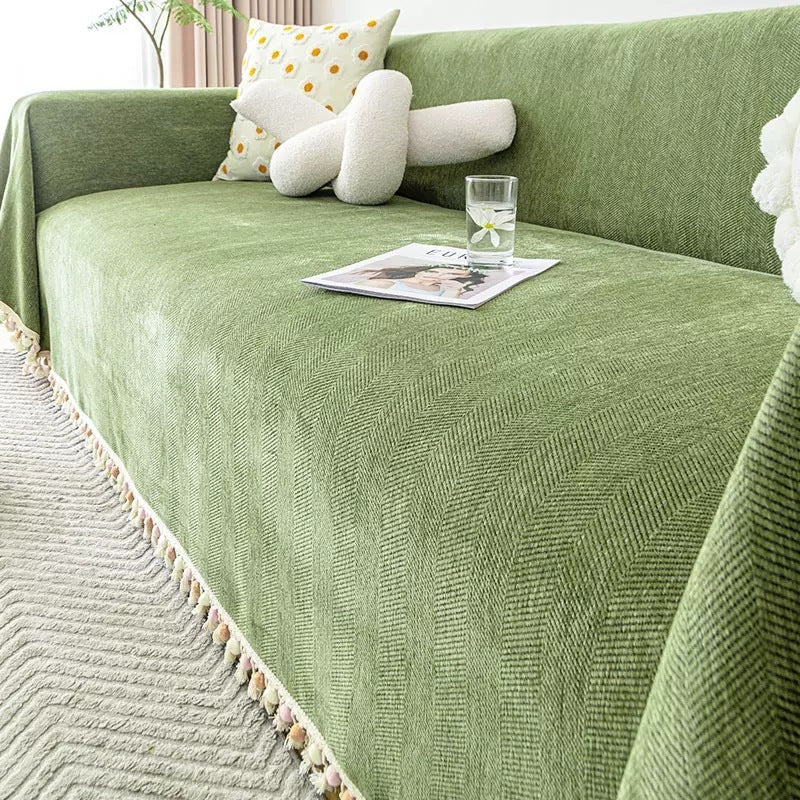


Chenille Light Luxury Sofa Cover: A Piece-by-Piece Lounge Upgrade for Australian Homes

A sofa cover can look straightforward in a photograph and become surprisingly complicated when you try to order it. Is the price for the whole lounge? Does “three-seater” describe your sofa accurately? Will a cover soften a leather seat, or simply slide towards the floor? Those are useful questions to answer before choosing a colour.
The Chenille Light Luxury High-End Sofa Cover is a particular kind of solution: a soft chenille cover sold as individual pieces, with an anti-slip backing and a product description that allows gentle-cycle machine washing. It is designed to refresh the surfaces you actually use rather than replace the sofa’s original upholstery. That makes it worth considering when the frame and cushions are comfortable but the everyday seating area needs a removable layer.
For an Australian household, the appeal is practical as much as decorative. The lounge might be the place for evening television, weekend visitors, children’s reading or a quick sit-down after work. A useful cover has to remain manageable through that ordinary routine. This guide explains how this product works, what its benefits mean in practice, and how to build a purchase around your own furniture rather than an idealised room photograph.
The product at a glance
- Material: chenille, with a soft textured finish.
- Format: loose individual sectional pieces, rather than a fitted stretch cover.
- Grip feature: an anti-slip backing described on the product page.
- Care: gentle-cycle machine washing is listed; check the supplied instructions for temperature and drying.
- Current colours: Beige, Dark Gray, Gray And Blue, Khaki and Matcha Green.
- Purchase unit: one cover piece in the selected size and colour.
In this guide
- The product at a glance
- 1. Why individual pieces can be a useful upgrade
- 2. What chenille changes about the seating experience
- 3. Map your lounge before you measure
- 4. Understand the size labels before adding to cart
- 5. Plan the drape without creating a fabric pile
- 6. Treat the anti-slip backing as a helping feature
- 7. Choose a colour that belongs in your room
- 8. Use washability to create a workable routine
- 9. Everyday protection has sensible limits
- 10. Work out the cost of your actual arrangement
- 11. An illustrative Australian lounge plan
- 12. When this cover is a good fit—and when to look elsewhere
- Frequently asked questions
- Your next step
1. Why individual pieces can be a useful upgrade
A single loose piece gives you control over where the cover goes. You might want to protect the busiest seat while keeping the original sofa arms visible. Alternatively, you can combine separate seat, backrest and arm pieces for a more complete visual change. Both approaches are valid, provided the dimensions suit the furniture.
This differs from a fitted cover that stretches around a compatible sofa frame. You are not buying a replacement upholstery skin with fixed seams for every corner. The result is a draped, layered appearance. If you like a relaxed lounge with visible texture, that can be a benefit. If you want a completely tailored finish around every contour, it may not match your expectation.
The modular approach also makes the purchase easier to stage. A household can begin with the seat area and add matching arm pieces later, subject to colour and stock availability. There is no need to buy coverage for a surface that stays clean and looks good uncovered. The useful question is not “How many covers should everyone buy?” but “Which parts of our sofa genuinely need a removable layer?”
Individual pieces can be especially convenient when one location gets more use than the rest. The place beside the television remote may collect more crumbs, hair or friction than the far end. Separate coverage lets you lift that area for routine cleaning without dismantling the entire lounge arrangement.
2. What chenille changes about the seating experience
Chenille is associated with a soft, visibly textured surface. On this product, that finish is part of the attraction: it can make a plain seat look more considered and introduce a tactile layer between you and the original upholstery. The exact feel still depends on the weave, thickness and backing of the piece you receive.
Texture also changes how colour appears. A chenille surface can look different as daylight moves across it, or when the pile is brushed in another direction. That is normal visual behaviour for textured fabric, not evidence that the cover is changing colour. Judge the product photographs as a guide and allow for the lighting in your own room.
It is sensible to separate comfort from structural support. A cover can change the surface feel, but it will not repair sagging foam or a damaged frame. If your sofa is uncomfortable because the cushions collapse, buying a cover solves a different problem. Start by checking the condition of the seat beneath it.
Likewise, a soft chenille finish is not a promise of stain resistance, waterproofing or complete scratch protection. Those features need their own product specifications. The Light Luxury listing supports softness, sectional coverage, an anti-slip backing and washability. Build your decision around those stated features.
3. Map your lounge before you measure
Start with a simple sketch. Draw each seating section, the backrest areas you want covered and the armrests. Mark fixed cushions, loose cushions, a chaise, a corner join or an ottoman. This is more useful than writing “three-seater” on a shopping list because that label does not describe the shape of the surfaces.
Then decide on the intended look. A seat-only arrangement shows more original upholstery and can be visually light. Seat-and-back coverage creates a stronger colour change. Arm pieces add protection where hands, pets or everyday contact occur. The extent of coverage affects both the number of pieces and the total purchase cost.
Measure the actual surfaces rather than relying on the sofa’s overall length. A broad outside frame can contain relatively narrow seat cushions. Deep seats may require a wider piece even when the sofa is not especially long. An unusually wide armrest needs its own dimensions.
Use a flexible measuring tape and record centimetres. If another person will place the order, photograph the measurements on the sketch. That removes the guesswork of remembering whether a number referred to the seat depth, the back height or the entire sofa width. Our sofa size guide is a useful companion to that process.
4. Understand the size labels before adding to cart
The current options include several families of dimensions: pieces around 70 cm wide, around 90 cm wide and around 110 cm wide, with different lengths within each family. The numbers identify fabric dimensions. They do not represent a universal seating-capacity rule.
For example, a 90 × 160 cm piece and a 110 × 160 cm piece share a length but offer different depth coverage. Which is suitable depends on the seat and the amount of drape you intend to use. Choosing the longer number alone can leave the front edge short or create unnecessary excess.
Take a household example: two adjacent seats may appear to need one long cover. However, if the cushions move independently, a single piece could bridge their join and shift when someone sits down. Two smaller pieces may make more sense. On another sofa with a continuous seat, a longer single piece might produce the neater arrangement. These are layout examples, not guaranteed size recommendations.
Before checkout, read every selected size again. Mixing 70 cm and 90 cm widths can be intentional when seat and arm depths differ, but it should not happen accidentally. Check that each piece on the order corresponds to one area on your sketch.
5. Plan the drape without creating a fabric pile
A loose cover needs enough fabric to sit neatly on its intended surface and accommodate the product’s recommended arrangement. That does not mean the biggest available piece will always look best. Excess material can bunch behind cushions, cover controls or gather under a person’s legs.
Try to visualise where the edges will finish. On a seat, you may want a controlled front overhang. On a backrest, consider whether the cover should stop near the top or extend over it. On an arm, consider the difference between protecting the horizontal surface and covering the entire outside face.
The aim is a usable arrangement, not a photograph that looks tidy only before anybody sits down. After fitting a piece, sit on the lounge, stand up and check the edges. If the fabric is pulled away from the busiest surface, the layout needs adjustment.
Keep moving furniture mechanisms clear. A loose sectional piece should not obstruct recliner controls, hinges, charging sockets or a sofa-bed action. If your lounge has those features, confirm compatibility before ordering. Do not assume that a rectangular cover can safely span every moving section.
6. Treat the anti-slip backing as a helping feature
The product lists an anti-slip backing. Its purpose is to help reduce movement during normal use. That is useful, but it works alongside suitable sizing and contact with the sofa rather than replacing them.
A correctly positioned piece has a better chance of staying useful than a cover pulled tightly across a gap or draped over a surface it barely touches. The backing cannot compensate for every sofa shape, loose cushion movement or an active pet repeatedly landing on the edge.
Smooth leather can behave differently from textured upholstery. Before covering a valuable or delicate sofa, check the original furniture manufacturer’s advice about materials placed against it. Keep both surfaces dry and inspect beneath the cover during routine cleaning.
Avoid improvised fixes such as sharp pins, staples or aggressive adhesive. They can damage furniture or create an uncomfortable seating area. Start with the dimensions, the amount of fabric and the way the cover is placed. If those are wrong, adding more fastening hardware rarely creates a satisfying result.
7. Choose a colour that belongs in your room
The five listed colours offer different directions without requiring a complete room makeover. Beige can work with warm timber and softer neutral furnishings. Dark Gray can create contrast against pale flooring. Matcha Green can become a quiet colour anchor where the rest of the room is restrained.
Gray And Blue and Khaki should be assessed in context rather than by their names alone. Product colour labels are useful for ordering, but they cannot show the exact tone under your own lighting. Compare the photographs with the fixed elements that will remain: the floor, curtains, wall colour and the original sofa where it stays visible.
A practical method is to choose one dominant direction and repeat it lightly elsewhere. If the cover is green, perhaps one existing cushion or artwork already carries a similar tone. If the room is warm and beige, a matching throw does not need to introduce another strong colour.
Do not choose the darkest option only because you expect it to hide everything. Pale crumbs and light pet hair can be more obvious on dark fabric; darker marks may be more visible on a light cover. The best colour is a balance between the room you enjoy looking at and the mess your household actually creates.
8. Use washability to create a workable routine
The product description lists gentle-cycle machine washing. That can make a removable seat layer more convenient than cleaning the original sofa upholstery every time it needs attention. However, “machine washable” is only the start of the care information.
Before the first wash, confirm the supplied temperature, detergent and drying instructions. The current listing does not justify inventing a specific temperature or saying that tumble drying is suitable. If the care label is unclear, contact the store before washing rather than experimenting with a hotter cycle.
Remove loose dust, hair and crumbs first. That helps prevent dry debris from being worked through the fabric during washing. Follow the washer’s own loading guidance too: a large wet cover can be bulky, and cramming it into a small drum is not a useful shortcut.
Plan for drying time. A cover should be fully dry before returning to the sofa, including the backing and any thick folded areas. In a home without a sheltered drying space, that practical question may matter as much as the cover colour. You want a routine that fits your laundry facilities, not an ideal routine that is difficult to carry out.
9. Everyday protection has sensible limits
A removable layer can intercept some ordinary contact with the original upholstery. It may help you manage hair, dust and everyday surface wear on the areas it covers. It also makes those areas easier to lift and inspect.
That benefit depends on coverage. An uncovered arm, a displaced edge or a gap between pieces still exposes the sofa. A cover is part of the household’s maintenance routine, not permission to ignore spills or stop cleaning underneath it.
This product is not described here as a waterproof barrier. If drinks, wet paws or accidents are your main concern, check a product with explicitly stated moisture-protection specifications. A chenille surface that looks substantial is not enough evidence by itself.
Nor should the cover be treated as completely claw-proof. Determined scratching, chewing or digging can damage textiles. For a home with pets, look at the animal’s habits and use suitable scratching surfaces or pet resting areas alongside furniture coverage. The right expectation is a replaceable layer that takes some everyday contact.
10. Work out the cost of your actual arrangement
The product price relates to the selected piece. Your useful comparison is the total for the pieces needed to create the coverage you want. A low starting price may refer to a small item, while a complete arrangement may involve several different dimensions.
Create a list with four columns: sofa area, required dimensions, chosen colour and selected product option. Then check the quantity for each line. If two arms use the same size, you may need two of that option. If the backrest needs a different width, it should appear as a separate selection.
Leave decorative accessories out of the comparison unless you intend to buy them separately. The cushions in the product photographs are styling props. Assuming they are included can make an otherwise careful order feel disappointing on arrival.
Check the current product page and checkout for pricing, stock, delivery information and any offer terms. A blog remains online longer than a promotion. Do not assume a discount, delivery date or bundle saving from an old screenshot applies to your new order.
11. An illustrative Australian lounge plan
Imagine a household with a comfortable neutral lounge, two busy seats and wide armrests. The original upholstery is still attractive, so the household does not want to hide the entire sofa. It wants a softer seat surface and a layer that can be removed for cleaning.
The sensible starting point is to measure those two seats and both arm surfaces. It might choose a consistent colour across the four areas, leaving the back visible. Before ordering, it would check whether the seats move independently and whether a single long piece would interfere with that movement.
Once fitted, the household would assess the arrangement in use: sitting, reading, reaching for a side table and standing up. Any movement would be addressed through placement and appropriate dimensions. The goal would be a lounge that stays pleasant through an ordinary evening rather than a perfect arrangement nobody touches.
This is an example of a buying process, not a customer testimonial or a promise about a specific four-piece set. Your sofa may need fewer or more pieces, and different sizes. The value of the example is the order of decisions: purpose, surfaces, measurements, colour, care and then purchase.
12. When this cover is a good fit—and when to look elsewhere
The Light Luxury cover is worth considering if you prefer a soft chenille surface, want flexibility across individual sofa sections and can accommodate the listed washing method. It is also useful when you want to keep some original upholstery visible rather than replace the whole lounge’s appearance.
It may be less suitable if your main requirement is guaranteed liquid containment, an exact manufacturer-specific replacement cover or a fully fitted finish around every corner. Those are different product briefs. Choosing the right cover starts with being honest about which brief matters most.
If you are unsure, compare your sketch and measurements with the current Chenille Light Luxury product page. Ask about any unclear size or care detail before placing the order. A short question is often more useful than adding an extra piece “just in case”.
You can also explore the sofa cover collection to compare formats. Keep the distinction clear: a draped sectional piece, a broad throw and a fitted stretch cover solve different layout problems even when each appears under the broader sofa-cover category.
Frequently asked questions
Does one Light Luxury cover cover a complete three-seater?
Not automatically. The product is sold as individual pieces, and a three-seater label does not identify the dimensions of the seats, backrests or arms. Measure every area you want covered and calculate the number of pieces from that plan.
Are the decorative cushions included?
No. The product listing explains that the cushions shown in the photographs are for display. The selected sofa-cover piece is the purchase unit; any accessory requires its own clearly identified option or separate product purchase.
Is this a fitted stretch slipcover?
The listing describes a loose sectional cover. Expect a draped arrangement over chosen surfaces rather than a stretch garment fitted around the entire sofa frame.
Is it suitable for a sofa with loose seat cushions?
It may be, but consider how the cushions move. Separate pieces can be easier to arrange over independent seats than one piece bridging several moving cushions. Check the measurements and test the layout during normal sitting.
Can I machine wash it?
Gentle-cycle machine washing is listed. Follow the supplied instructions for the full washing and drying method. Ask the store if the temperature or drying advice is not clear; do not infer it from another chenille product.
Will the backing stop all movement?
No grip feature should be treated as an absolute guarantee. The sofa surface, cover dimensions, amount of overhang and household activity all affect stability. Periodic repositioning may still be needed.
What should I check before buying?
Confirm the exact dimensions, number of pieces, selected colour, care method, current price and delivery information. Most importantly, make sure the product’s stated benefits match the reason you are buying it.
Your next step
The strongest reason to choose this cover is the combination of a soft chenille finish and control over individual lounge sections. Begin with the areas that need coverage, select dimensions deliberately, and choose a colour that works with the furnishings you already own.
Sources and further reading
Product features and available options were checked against the Chenille Light Luxury product listing on 9 October 2026. For broader care principles, James Lane’s fabric-care guidance explains why the supplied care label matters. Our sofa size guide provides the next measurement step.
The header is an AI-created styling illustration based on the product reference. The buying card shows the actual listing photograph.
Disclaimer
This guide provides general information. Materials, dimensions, protection features and care requirements vary by product. Refer to the individual product page for current specifications before purchasing.
Sofa Throw vs Sofa Cover: Which Is Better for Australian Homes?
Spring Chenille Sofa Cover: Rainforest Secret Colour for a Neutral Australian Lounge
Continue reading

StriGuard Sofa Towel: Striped Cotton-Blend Coverage with Realistic Pet Protection

Stretchy Nordic Sofa Cover: A Closer Fit for Compatible Australian Sofas

Dual-Sided Geometric Jacquard Sofa Cover: Cotton Chenille with a Graphic Finish

SoftBlend Luxe Sofa Cover: Cotton-Blend Comfort and Gentle Care for Australian Homes

Water-Repellent Sofa Protection: A Practical Guide to the Anti-Scratching Cover

ChenilleEase Slipcover: A Removable Layer for Dust and Everyday Seat Wear

Persian Floral Sofa Slipcover: Patterned Imitation Linen for a Plain Lounge
